The Microplastics Problem in Baby Bottles
Here’s something that keeps new parents up at night: a 2020 study in Nature Food found that polypropylene baby bottles can release up to 16 million microplastic particles per liter when preparing formula with hot water.
Let that sink in. Every time you shake up a warm bottle of formula, millions of tiny plastic particles could be going straight into your baby’s digestive system.
And it gets worse. A 2025 study in the Microchemical Journal confirmed these findings, showing that heat, repeated washing, and sterilization all increase microplastic release from plastic bottles.
Babies are especially vulnerable because:
- Their detox systems are still developing
- They consume more food relative to body weight than adults
- Microplastics can disrupt hormone development during critical growth periods
The solution? Switch to glass, stainless steel, or medical-grade silicone bottles that don’t release microplastics – ever.
Why “BPA-Free” Plastic Bottles Aren’t Safe Enough
You’ve probably seen “BPA-free” labels on baby products and felt reassured. Unfortunately, that label doesn’t mean much anymore.
When manufacturers removed BPA (bisphenol A) from plastics, they often replaced it with similar chemicals like BPS and BPF. Studies show these substitutes can be just as harmful as BPA – they’re still endocrine disruptors that can interfere with hormone development.
Beyond BPA substitutes, all plastic bottles can:
- Leach chemicals when heated (even in dishwashers)
- Release more chemicals as they age and develop scratches
- Harbor bacteria in tiny cracks and crevices
- Retain odors and stains over time
The only way to completely avoid these risks? Skip plastic baby bottles entirely.
The 3 Safest Baby Bottle Materials
Glass Baby Bottles
Best for: Home use, parents who want zero chemical exposure
Glass is the gold standard for baby bottle safety. It’s completely inert – meaning it won’t leach any chemicals into your baby’s milk, no matter how many times you heat or sterilize it.
Pros:
- 100% non-toxic – no chemical leaching ever
- Doesn’t retain odors or stains
- Easy to see milk levels and cleanliness
- Lasts forever with proper care
- Eco-friendly and recyclable
Cons:
- Heavier than plastic or silicone
- Can break if dropped (though silicone sleeves help)
- Higher upfront cost
Stainless Steel Baby Bottles
Best for: Active families, travel, daycare, older babies
Stainless steel bottles combine the safety of glass with unbreakable durability. They’re perfect for on-the-go families who need bottles that can survive being dropped, tossed in diaper bags, or handed to energetic toddlers.
Pros:
- Virtually indestructible
- No chemical leaching
- Lightweight compared to glass
- Excellent temperature retention
- Grows with baby (many convert to sippy cups)
Cons:
- Can’t see milk levels through bottle
- May dent if dropped on hard surfaces
- More expensive than glass
Medical-Grade Silicone Baby Bottles
Best for: Travel, toddlers learning to hold bottles, daycare
Medical-grade silicone is the safest “soft” option. It’s squeezable like plastic but doesn’t contain any harmful chemicals. The soft texture also makes it easier for babies to grip and hold on their own.
Pros:
- Soft and squeezable – won’t break
- Lightweight and easy to grip
- Safe when made from 100% medical-grade silicone
- Great for travel
Cons:
- Can be harder to clean thoroughly
- May not last as long as glass or steel
- Quality varies – must verify “medical-grade” claims
Best Glass Baby Bottles 2026
1. Philips Avent Natural Glass Bottles – Best Overall
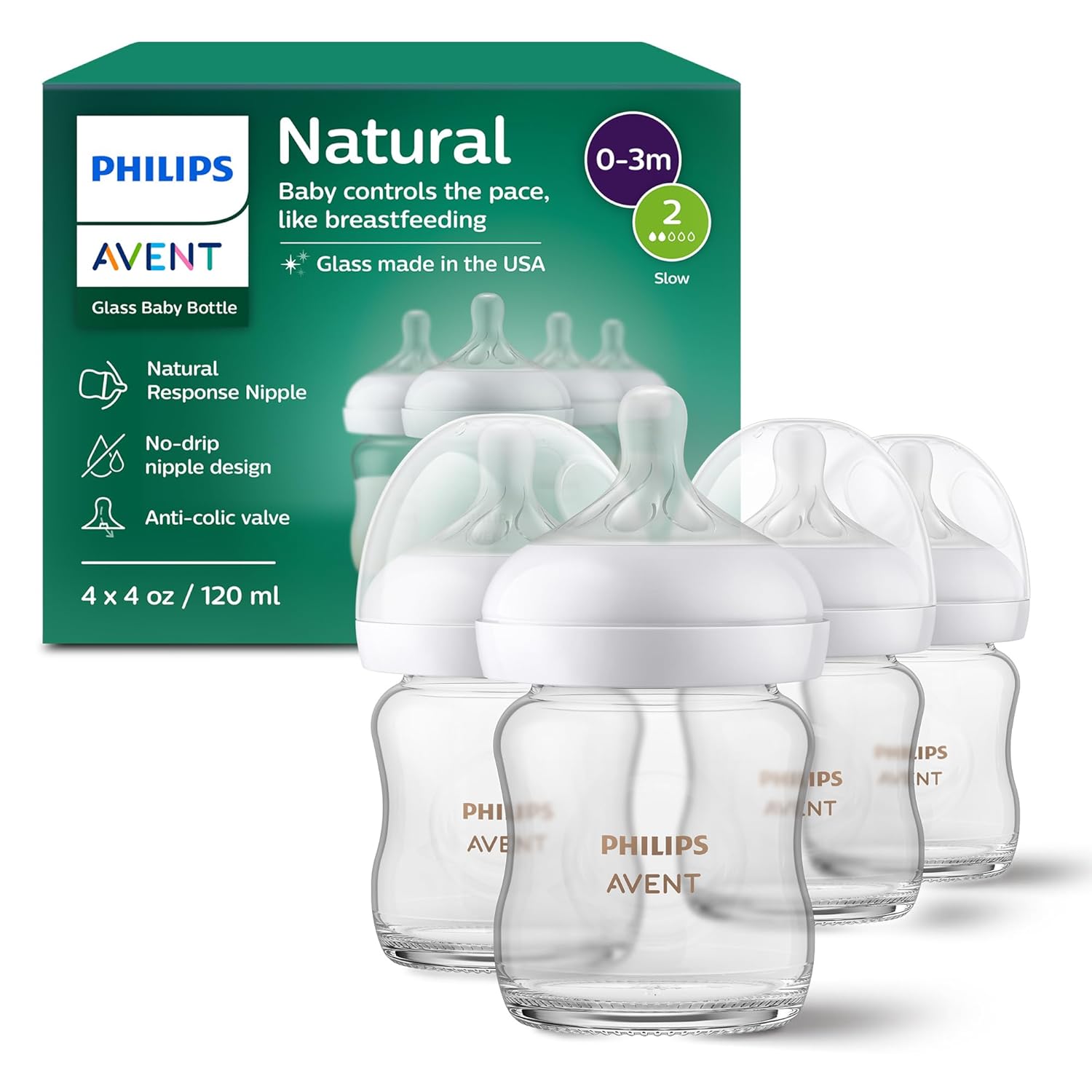
Philips Avent has been a trusted name in baby feeding for decades, and their glass bottles deliver on that reputation.
Made from premium borosilicate glass (the same thermal shock-resistant glass used in lab equipment), these bottles can handle the temperature swings of heating, cooling, and sterilization without cracking.
The Natural Response nipple is designed to mimic breastfeeding – it only releases milk when baby actively sucks, reducing overfeeding and gas.
Key Features:
- Borosilicate glass – thermal shock resistant
- Natural Response nipple mimics breastfeeding
- Anti-colic design reduces air intake
- Wide neck for easy filling and cleaning
- Compatible with Philips Avent breast pumps
Available sizes: 4oz and 8oz
Price: $30-45 for 4-pack
2. Lifefactory Glass Bottles – Best with Silicone Sleeve
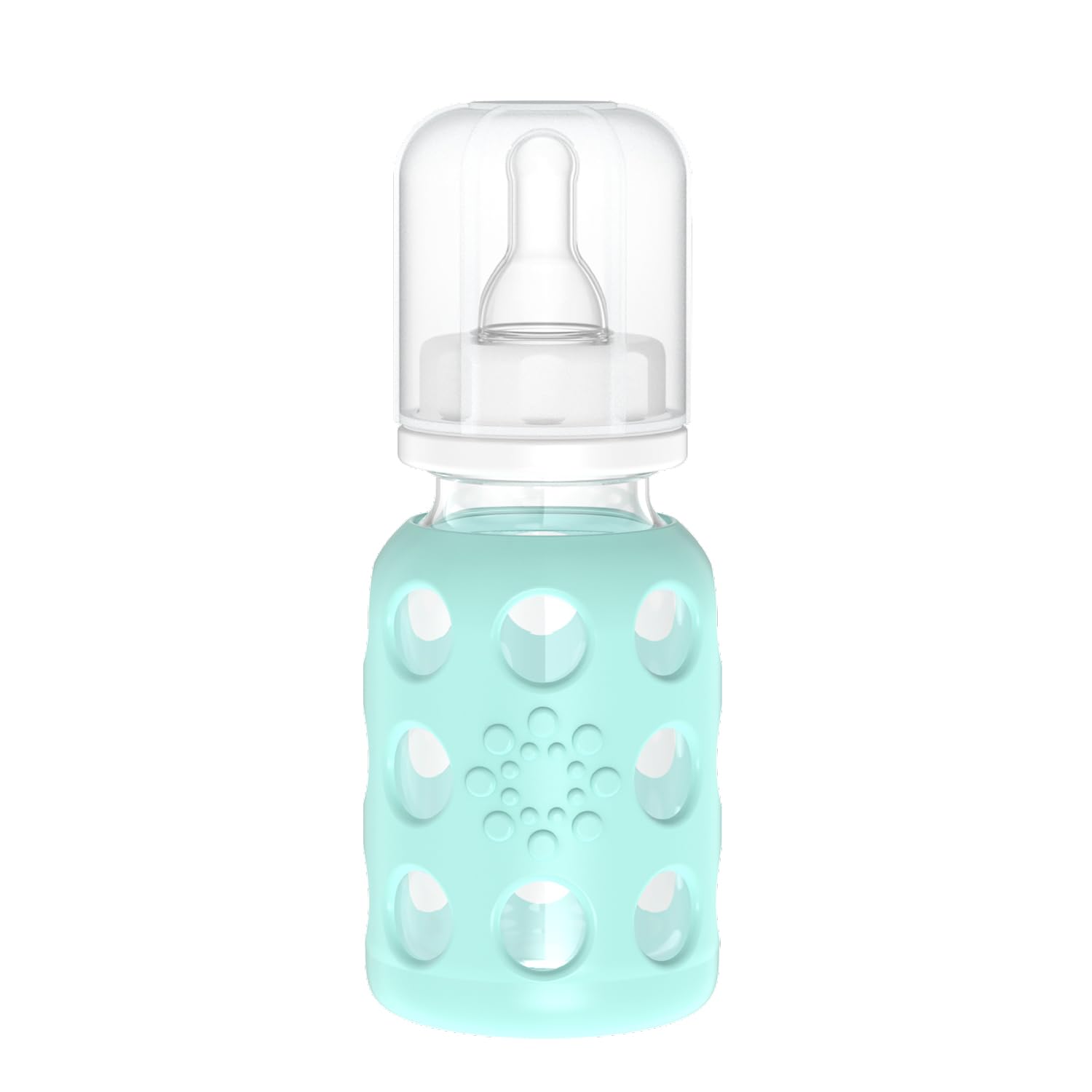
Lifefactory bottles come with a colorful silicone sleeve that serves double duty: it protects the glass from breaking AND makes it easier for little hands to grip.
The bottles are made from borosilicate glass, and the sleeves are made from medical-grade silicone – so you’re getting two safe materials in one product.
What parents love: the sleeve stays on during washing and sterilizing, so you don’t have to worry about removing and replacing it constantly.
Key Features:
- Protective silicone sleeve included
- Borosilicate glass construction
- Multiple nipple stages available
- Colorful options for easy identification
- Wide mouth for easy cleaning
Available sizes: 4oz and 9oz
Price: $18-25 per bottle
3. Dr. Brown’s Options+ Glass Bottles – Best for Colic
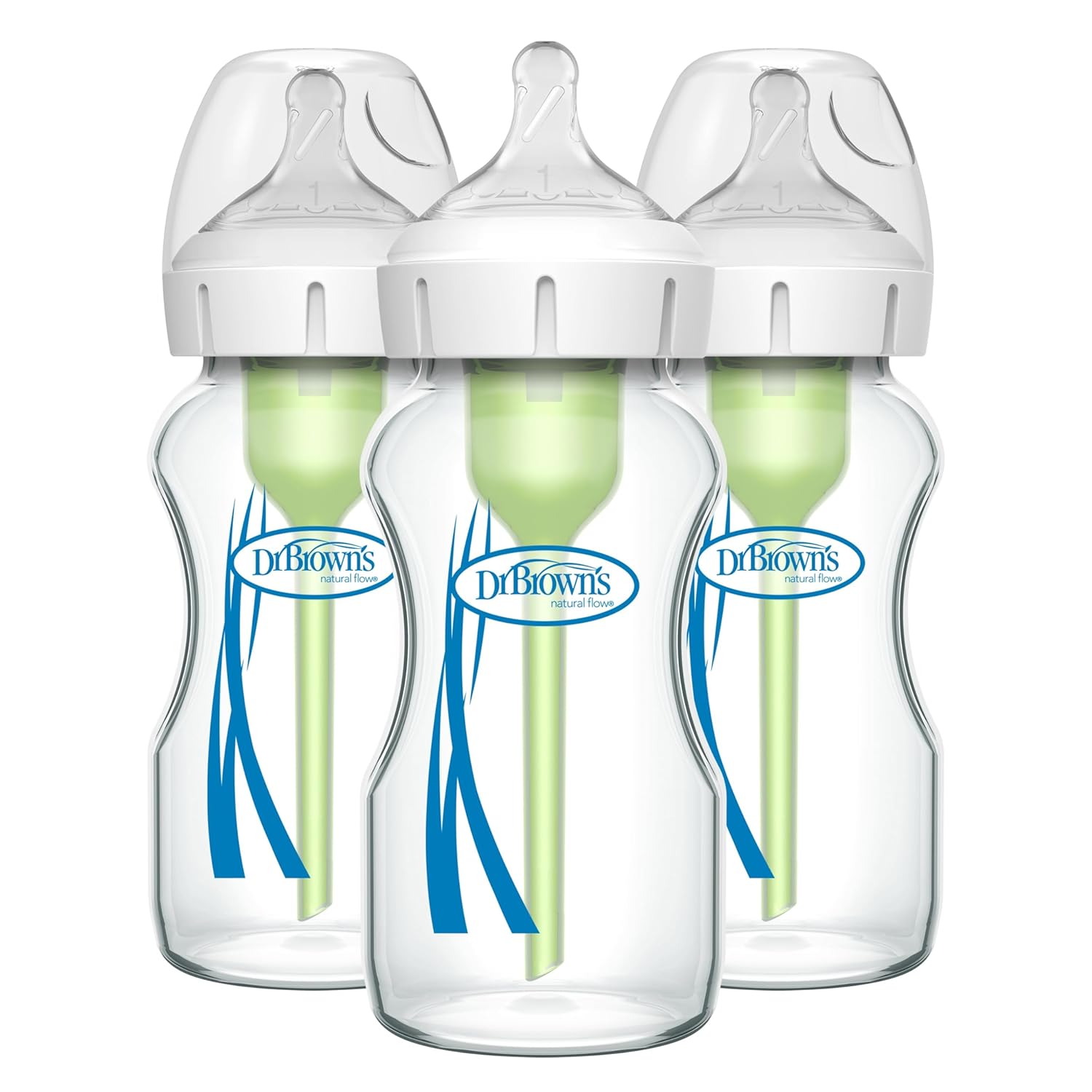
If your baby struggles with gas, colic, or spit-up, Dr. Brown’s patented internal vent system is a game-changer. It’s clinically proven to reduce colic, spit-up, burping, and gas.
The Options+ line lets you use the bottles with or without the vent system – helpful as your baby grows and may no longer need the anti-colic features.
Key Features:
- Patented anti-colic internal vent system
- Clinically proven to reduce feeding problems
- Options+ design works with or without vent
- Vacuum-free feeding preserves nutrients
- Available in standard and wide-neck
Available sizes: 4oz, 5oz, and 8oz
Price: $25-35 for 2-pack
Best Stainless Steel Baby Bottles 2026
4. Pura Kiki Stainless Steel Bottles – Best Overall Stainless
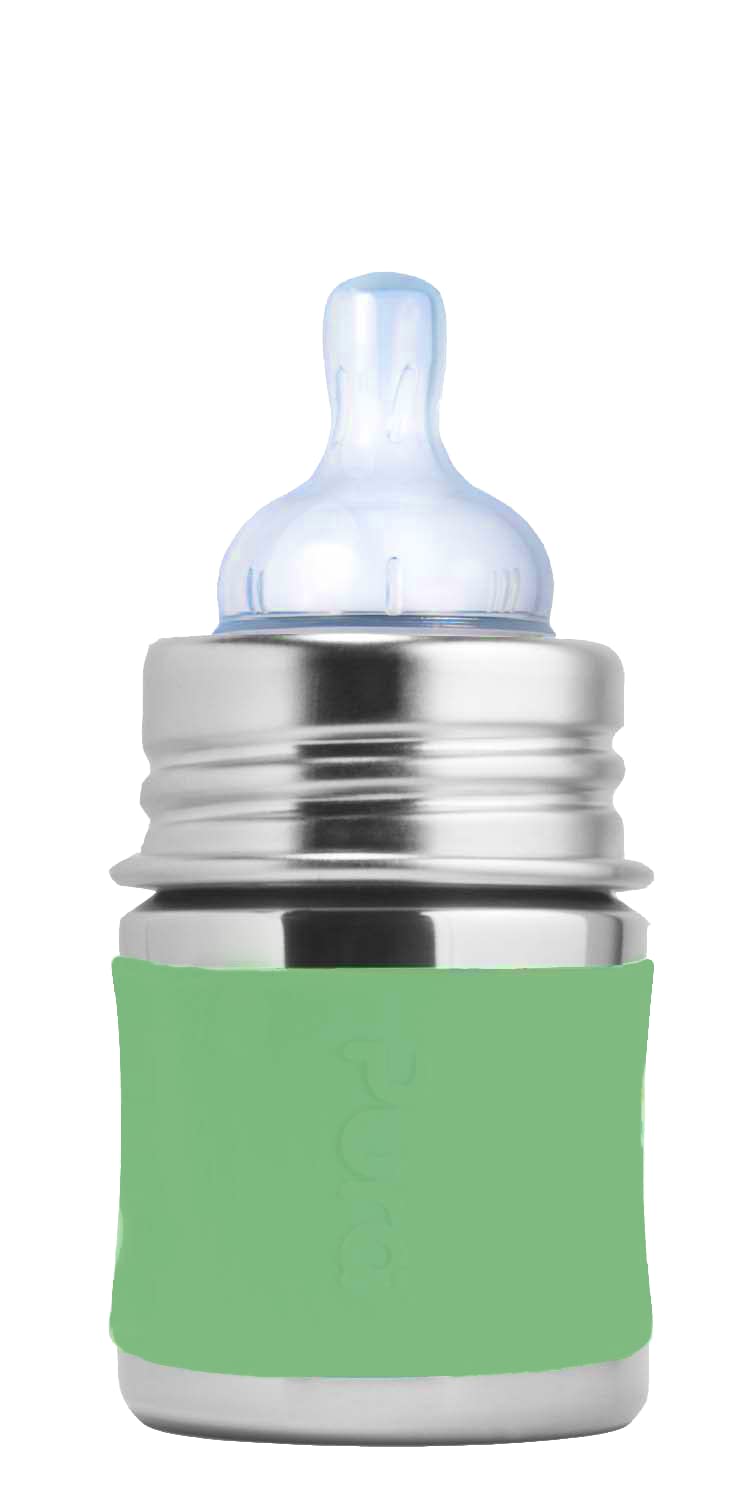
Pura Kiki is the only brand making 100% plastic-free stainless steel baby bottles. Every component – from the bottle to the cap to the silicone nipple – is free from plastic.
What makes Pura special: their bottles grow with your child. You can swap out the nipple for a sippy spout, straw lid, or sports cap as your baby becomes a toddler and beyond. One bottle, years of use.
Key Features:
- 100% plastic-free construction
- Medical-grade silicone nipples
- Grows with child – multiple lid options
- Double-wall insulated option available
- Dishwasher safe
Available sizes: 5oz, 9oz, and 11oz
Price: $20-30 per bottle
5. Klean Kanteen Baby Bottle – Best for Eco-Conscious Families
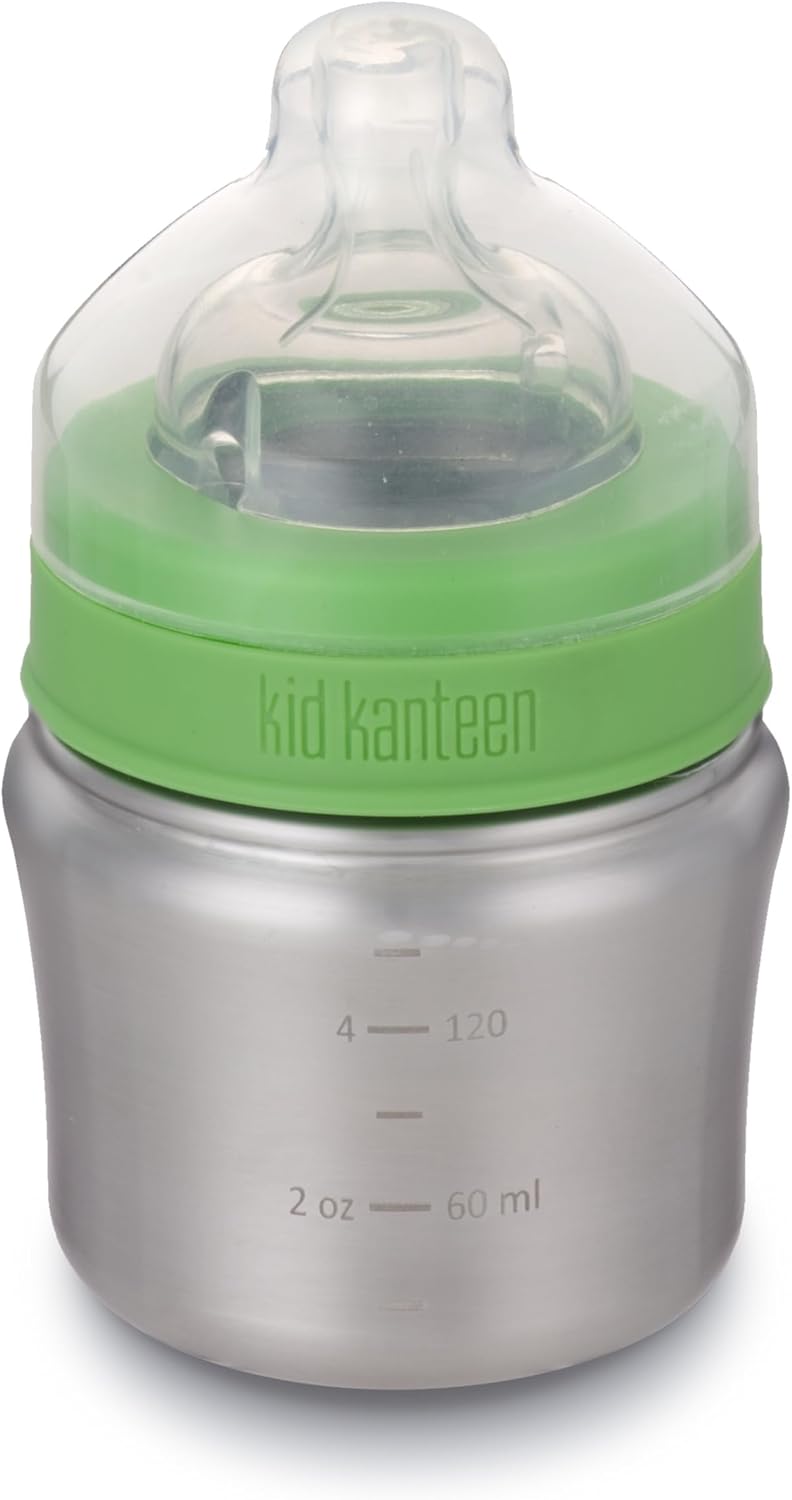
Klean Kanteen has been making stainless steel bottles since 2004 – long before it was trendy. Their baby bottle brings that expertise to infant feeding.
Made from 18/8 food-grade stainless steel with a medical-grade silicone nipple, it’s built to last through multiple children. The brushed steel finish hides scratches and dents better than polished options.
Key Features:
- 18/8 food-grade stainless steel
- Climate Lock insulation available
- Interchangeable cap system
- Certified B Corporation – environmentally responsible
- Lifetime warranty
Available sizes: 5oz and 9oz
Price: $25-35 per bottle
Best Silicone Baby Bottles 2026
6. Comotomo Baby Bottles – Best Silicone Option
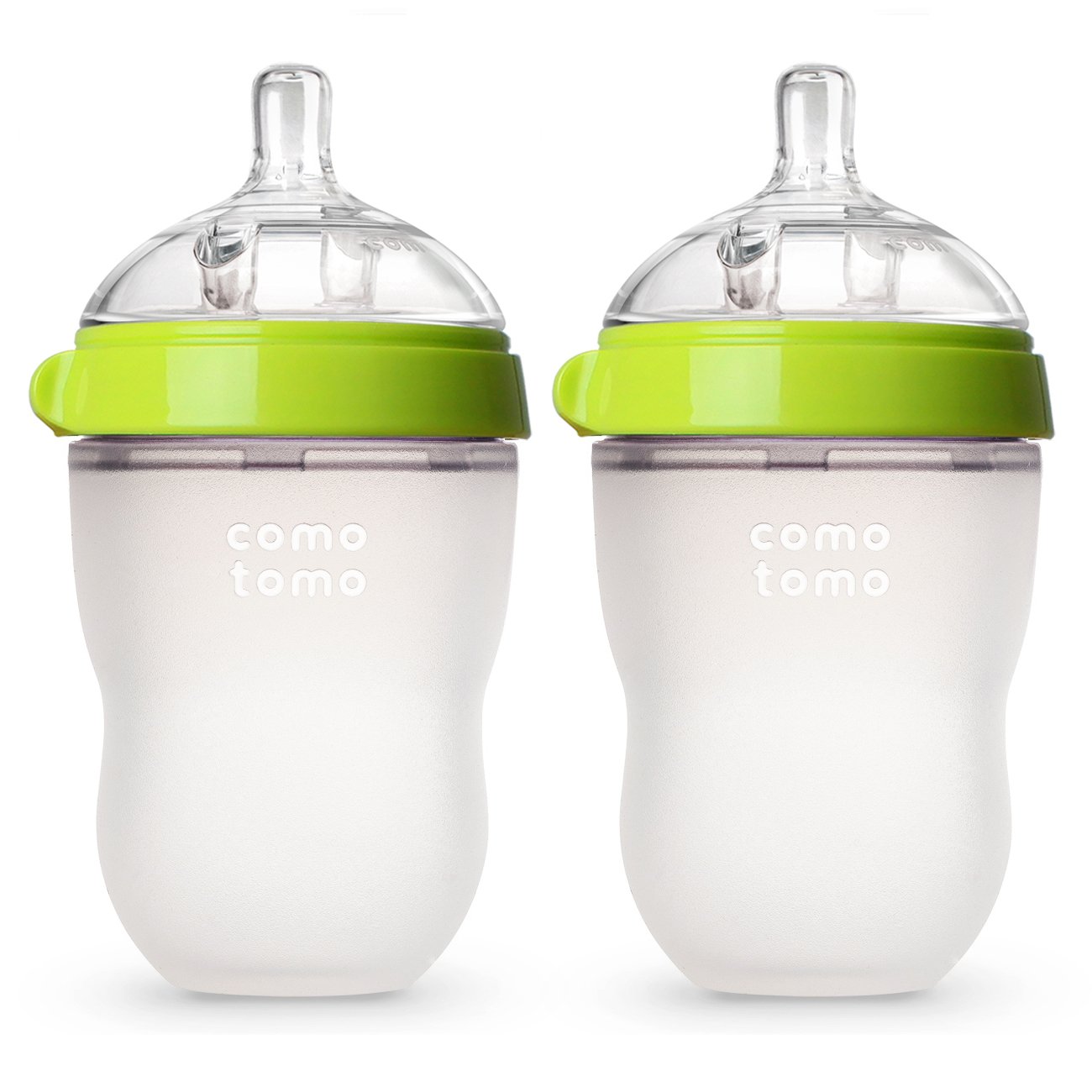
Comotomo bottles are designed to mimic the feel of breastfeeding. The soft, squeezable silicone body and naturally-shaped nipple help babies transition between breast and bottle more easily.
Made from 100% medical-grade silicone (both the bottle body and nipple), Comotomo bottles are completely free from BPA, PVC, and phthalates.
The wide-mouth design makes cleaning easy – you can actually reach inside with a sponge instead of needing a bottle brush.
Key Features:
- 100% medical-grade silicone
- Soft, squeezable design mimics breast
- Dual anti-colic vents
- Wide mouth for easy cleaning
- Skin-like texture for natural feel
Available sizes: 5oz and 8oz
Price: $25-30 for 2-pack
How to Choose the Right Non-Toxic Baby Bottle
Consider Your Lifestyle
Mostly home feeding: Glass bottles are your best bet. The extra weight doesn’t matter when you’re sitting in a nursery chair.
Working parents / daycare: Stainless steel or silicone are more practical. They’re lighter, won’t break, and daycare providers will thank you.
Frequent travelers: Silicone or stainless steel. Both are TSA-friendly and can handle being tossed in a diaper bag.
Consider Your Baby’s Needs
Colicky or gassy baby: Look for anti-colic features like Dr. Brown’s internal vent system.
Transitioning from breastfeeding: Wide-base nipples (Philips Avent, Comotomo) help babies switch more easily.
Premature or slow-eating baby: Start with slow-flow nipples regardless of bottle choice.
Consider Your Budget
Budget-friendly: Basic glass bottles run $15-20 each
Mid-range: Glass with silicone sleeves or quality silicone bottles $20-30 each
Premium: Stainless steel systems with multiple lids $25-35 each
Remember: you’re investing in your baby’s health and in bottles that will last through multiple children. The upfront cost is higher than plastic, but the long-term value (and peace of mind) is worth it.
Bottle Nipple Safety: What to Look For
Even if your bottle is glass or steel, the nipple still matters. Here’s what to look for:
Choose:
- 100% medical-grade silicone nipples
- Food-grade silicone (second best)
- Nipples specifically labeled “BPA, PVC, and phthalate-free”
Avoid:
- Natural rubber latex (allergy risk)
- Cheap silicone blends with unknown additives
- Any nipple with a strong chemical smell
Flow rates by age:
- 0-3 months: Slow flow (Stage 1)
- 3-6 months: Medium flow (Stage 2)
- 6+ months: Fast flow (Stage 3)
Replace nipples every 2-3 months, or sooner if you notice any tears, discoloration, or stickiness.
How to Clean and Sterilize Non-Toxic Baby Bottles
Daily Cleaning
- Rinse bottles immediately after feeding to prevent milk buildup
- Wash with warm water and fragrance-free dish soap
- Use a bottle brush to scrub inside (glass) or a soft sponge (silicone)
- Rinse thoroughly to remove all soap residue
- Air dry upside down on a clean drying rack
Dishwasher: Glass and stainless steel bottles are dishwasher-safe (top rack recommended). Check manufacturer guidelines for silicone bottles.
Weekly Sterilization
Boiling method: Submerge bottles in boiling water for 5 minutes. Let cool before handling.
Steam sterilizer: Follow manufacturer instructions. Works for all materials.
Important: Never microwave baby bottles to heat milk – it creates dangerous hot spots and can cause burns.
What to Avoid When Buying Baby Bottles
- Any plastic bottles – even “BPA-free” varieties
- Polycarbonate plastic (recycling code #7) – may still contain BPA
- Bottles with decorative paint – may contain lead
- Used plastic bottles – unknown chemical exposure history
- Bottles from unknown brands – may not meet safety standards
Frequently Asked Questions
Are glass baby bottles safe if they break?
Modern glass baby bottles use borosilicate glass (lab-grade) that’s designed to resist breaking. Most also come with protective silicone sleeves. If a bottle does break, it tends to crack rather than shatter into tiny pieces. That said, always inspect bottles before each use and replace any that show chips or cracks.
How many bottles do I need?
For newborns, most parents find 6-8 bottles is ideal. This gives you enough for a full day of feeding while you wash and sterilize. If you’re breastfeeding and only occasionally bottle feeding, 3-4 may be enough.
Can I use glass bottles at daycare?
Many daycares accept glass bottles, especially with silicone sleeves. Check with your specific daycare first. If they don’t allow glass, stainless steel is your next best option.
Do stainless steel bottles affect the taste of milk?
High-quality food-grade stainless steel (18/8 or 304 grade) does not affect taste. Lower-quality steel or aluminum can give a metallic taste – stick with reputable brands like Pura Kiki or Klean Kanteen.
Are silicone bottles as safe as glass?
100% medical-grade silicone is considered just as safe as glass – it doesn’t leach chemicals or harbor bacteria. The key is ensuring you’re getting genuine medical-grade silicone, not cheap imitations. Stick with established brands.
The Bottom Line
The research is clear: plastic baby bottles release microplastics and potentially harmful chemicals into your baby’s milk. The safest options are glass, stainless steel, or medical-grade silicone.
Yes, they cost more upfront. But they last longer, don’t degrade over time, and – most importantly – give you peace of mind that you’re protecting your baby from unnecessary chemical exposure during the most vulnerable period of their development.
For most families, we recommend starting with Philips Avent Natural Glass Bottles for home use and adding a set of Pura Kiki stainless steel bottles for travel and daycare as your baby grows.
Your baby deserves the safest start possible. Plastic-free bottles are one of the easiest switches you can make.