Last updated: September 2026
That non-stick pan you use every morning? There is a good chance it is coated with PFAS – synthetic “forever chemicals” that never break down in the environment or your body. A 2022 study published in Environmental Science & Technology found PFAS in the blood of 98% of Americans tested. Your cookware is one of the most direct routes of exposure.
The good news: you do not need chemical coatings to cook well. Cast iron, stainless steel, carbon steel, and ceramic cookware all deliver excellent results without the health risks. I compared coatings, certifications, and long-term reviews of PFAS-free cookware across every category so you can find a pan that actually cooks food, not a chemistry experiment.
Why Non-Stick Coatings Are a Problem
Traditional non-stick cookware uses PTFE (polytetrafluoroethylene) – sold under the brand name Teflon – or newer coatings that still rely on PFAS (per- and polyfluoroalkyl substances). Here is why that matters:
- PFAS are “forever chemicals”: They do not break down naturally. Once in your body, some PFAS have a half-life of 4-8 years. They accumulate over time with repeated exposure.
- Overheating releases toxic fumes: PTFE-coated pans heated above 500F release toxic fumes that can cause flu-like symptoms (polymer fume fever). Most stovetop burners can reach this temperature in 2-5 minutes on high heat.
- Scratched coatings leach chemicals: A 2022 study in Science of The Total Environment found that a single scratch on a non-stick pan can release approximately 9,100 plastic particles. Flaking coatings end up in your food.
- Health links are concerning: PFAS exposure has been associated with thyroid disease, liver damage, immune system suppression, reproductive issues, and certain cancers. The EPA set near-zero advisory levels for some PFAS in drinking water in 2023.
- “PFOA-free” is not enough: Many manufacturers replaced PFOA with GenX and other PFAS compounds that early research suggests carry similar risks. The problem is the entire chemical class, not just one compound.
The bottom line: if you want to eliminate one of the most common sources of PFAS exposure in your home, start with your cookware.
What to Look for in Non-Toxic Cookware
Here is what matters when choosing PFAS-free cookware:
- Material: Cast iron, carbon steel, stainless steel, and ceramic-coated cookware are all PFAS-free options. Each has trade-offs in performance, maintenance, and price.
- No PTFE or PFAS coatings: Look for cookware explicitly labeled “PFAS-free” or “PTFE-free.” Be skeptical of vague claims like “non-toxic” without specifics.
- Ceramic coatings – with a caveat: Ceramic non-stick coatings (like Thermolon used by GreenPan and Caraway) are genuinely PFAS-free. However, they wear out faster than traditional non-stick – expect 1-3 years of peak non-stick performance with regular use.
- Heat tolerance: Uncoated cast iron and carbon steel can handle any heat your stove produces. Ceramic coatings perform best on medium heat. Stainless steel is virtually indestructible.
- Reactivity: Bare cast iron and carbon steel can react with acidic foods (tomato sauce, wine, citrus). Enameled cast iron, stainless steel, and ceramic coatings are non-reactive.
One honest note: there is no perfect cookware material. The best kitchen has 2-3 types that cover different cooking needs. We will help you figure out which ones make sense for you.
Best Cast Iron Cookware
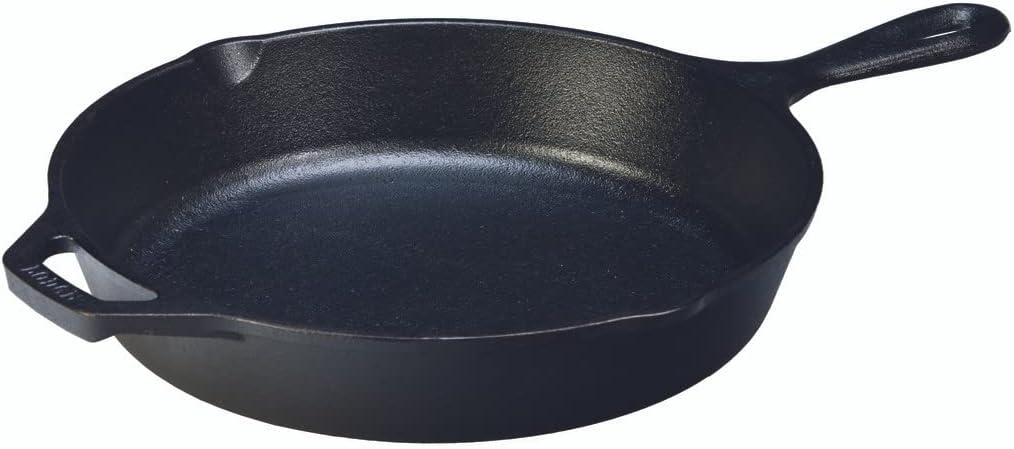
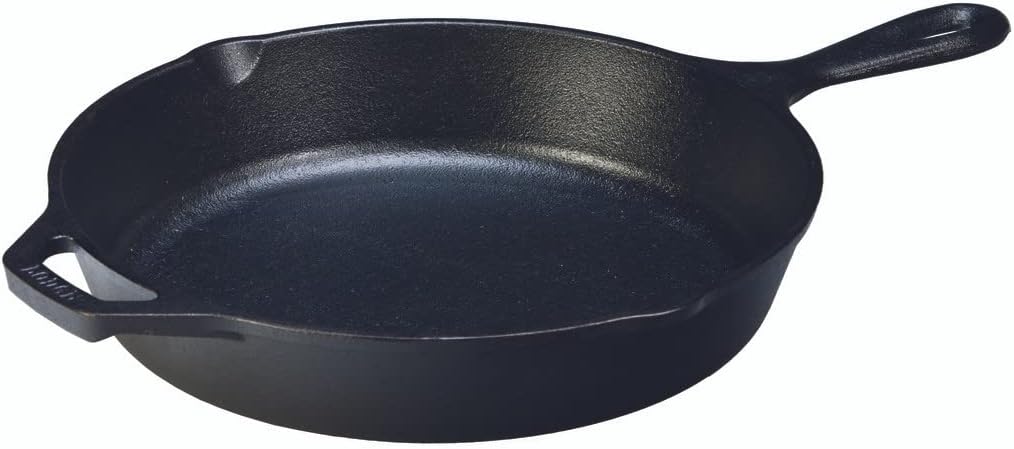
1. Lodge 12″ Pre-Seasoned Cast Iron Skillet – Best Value Overall
Material: Pre-seasoned cast iron
Size: 12 inches
Price: ~$35-45
Rating: 4.6/5 stars (200,000+ reviews)
The Lodge 12″ skillet is the best-selling cast iron pan in America for a reason. It comes pre-seasoned with vegetable oil (no synthetic coatings), heats evenly, and develops a natural non-stick surface over time. Lodge has been making cast iron in South Pittsburg, Tennessee since 1896 – and these pans routinely last decades.
Key features:
- Pre-seasoned with 100% vegetable oil – ready to use out of the box
- Dual pour spouts and assist handle
- Compatible with all cooktops including induction
- Oven safe to any temperature
- Made in the USA
- Naturally PFAS-free – zero coatings
Pros: Unbeatable value, lasts a lifetime, naturally non-stick when seasoned, incredible heat retention, oven and campfire safe, huge community of fans
Cons: Heavy (8 lbs), requires seasoning maintenance, not dishwasher safe, can react with acidic foods, slow to heat up
2. Le Creuset Signature Enameled Cast Iron Skillet – Best Premium Cast Iron
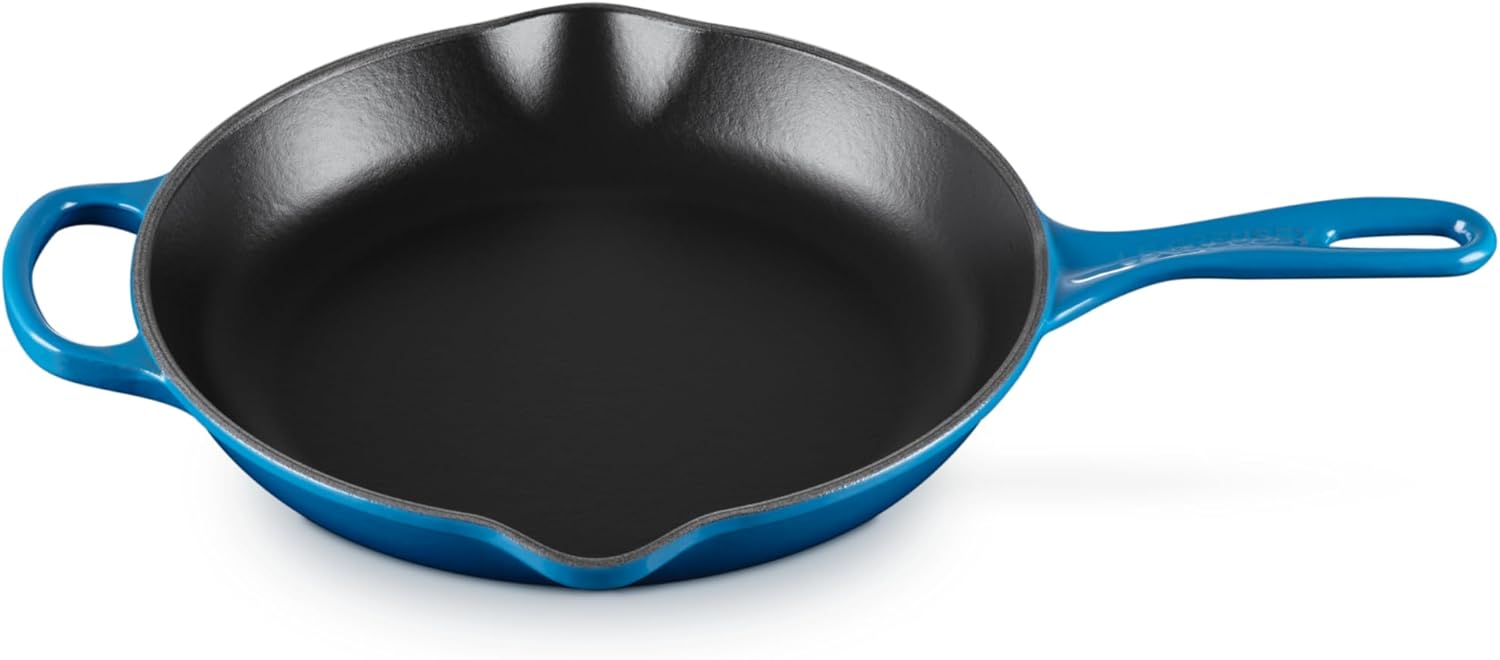
Material: Enameled cast iron with black satin enamel interior
Size: 10.25 inches
Price: ~$200-310
Rating: 4.7/5 stars (3,500+ reviews)
Le Creuset is the gold standard for enameled cast iron. The Signature Skillet features a black satin enamel interior that eliminates the need for seasoning while remaining completely PFAS-free. The enamel is chip-resistant porcelain – no synthetic chemicals involved. You get the heat retention of cast iron without the maintenance or food reactivity.
Key features:
- Black satin enamel interior – no seasoning needed
- Non-reactive – cook tomatoes, wine sauces, and acidic foods freely
- Available in 20+ signature colors
- Compatible with all cooktops including induction
- Oven safe to 500F
- Lifetime warranty
Pros: Zero maintenance, non-reactive enamel, beautiful colors, lifetime warranty, excellent heat retention, no seasoning required
Cons: Expensive, heavy, enamel can chip if dropped, not as naturally non-stick as seasoned bare cast iron, hand wash recommended
Best Stainless Steel Cookware
3. All-Clad D3 12″ Stainless Steel Fry Pan – Best Stainless Steel
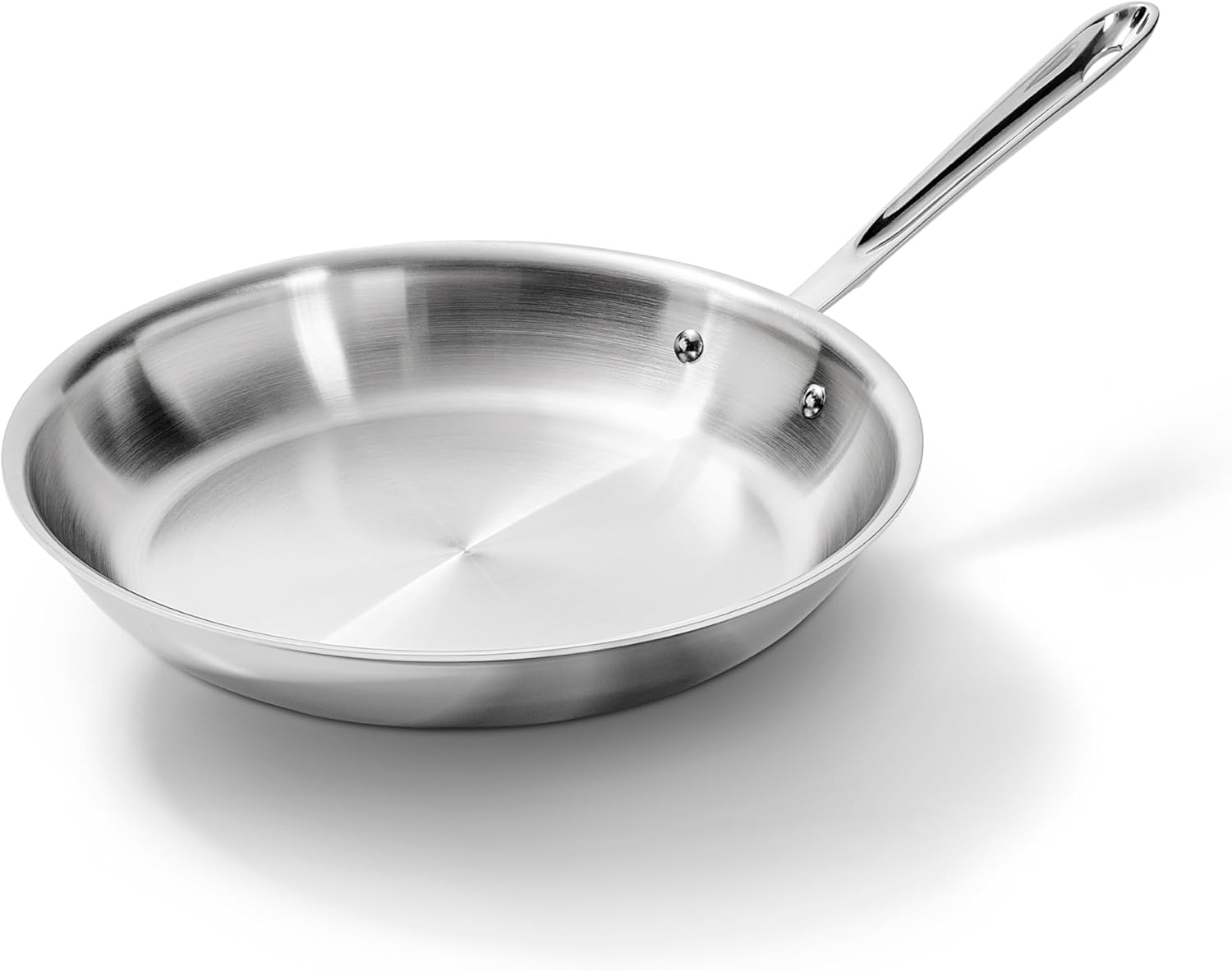
Material: Tri-ply bonded stainless steel (18/10 steel, aluminum core, 18/10 steel)
Size: 12 inches
Price: ~$150-220
Rating: 4.6/5 stars (10,000+ reviews)
All-Clad invented bonded cookware in 1971, and the D3 line remains the industry benchmark. Three layers – stainless steel exterior, aluminum core for conductivity, stainless steel cooking surface – deliver even heating without any coatings whatsoever. Professional chefs have used stainless steel for decades because it sears better than non-stick and will never flake, peel, or degrade.
Key features:
- Tri-ply bonded construction for even heating
- 18/10 stainless steel cooking surface – completely inert
- Made in the USA (Canonsburg, Pennsylvania)
- Induction compatible
- Oven and broiler safe to 600F
- Dishwasher safe
- Lifetime warranty
Pros: Professional-grade performance, completely non-reactive, dishwasher safe, lifetime warranty, Made in USA, excellent searing
Cons: Expensive, food sticks without proper technique (preheat + oil), learning curve for non-stick cooking, can develop water spots
Best Ceramic Non-Stick Cookware
4. Caraway Ceramic Nonstick Frying Pan – Best Ceramic Pan
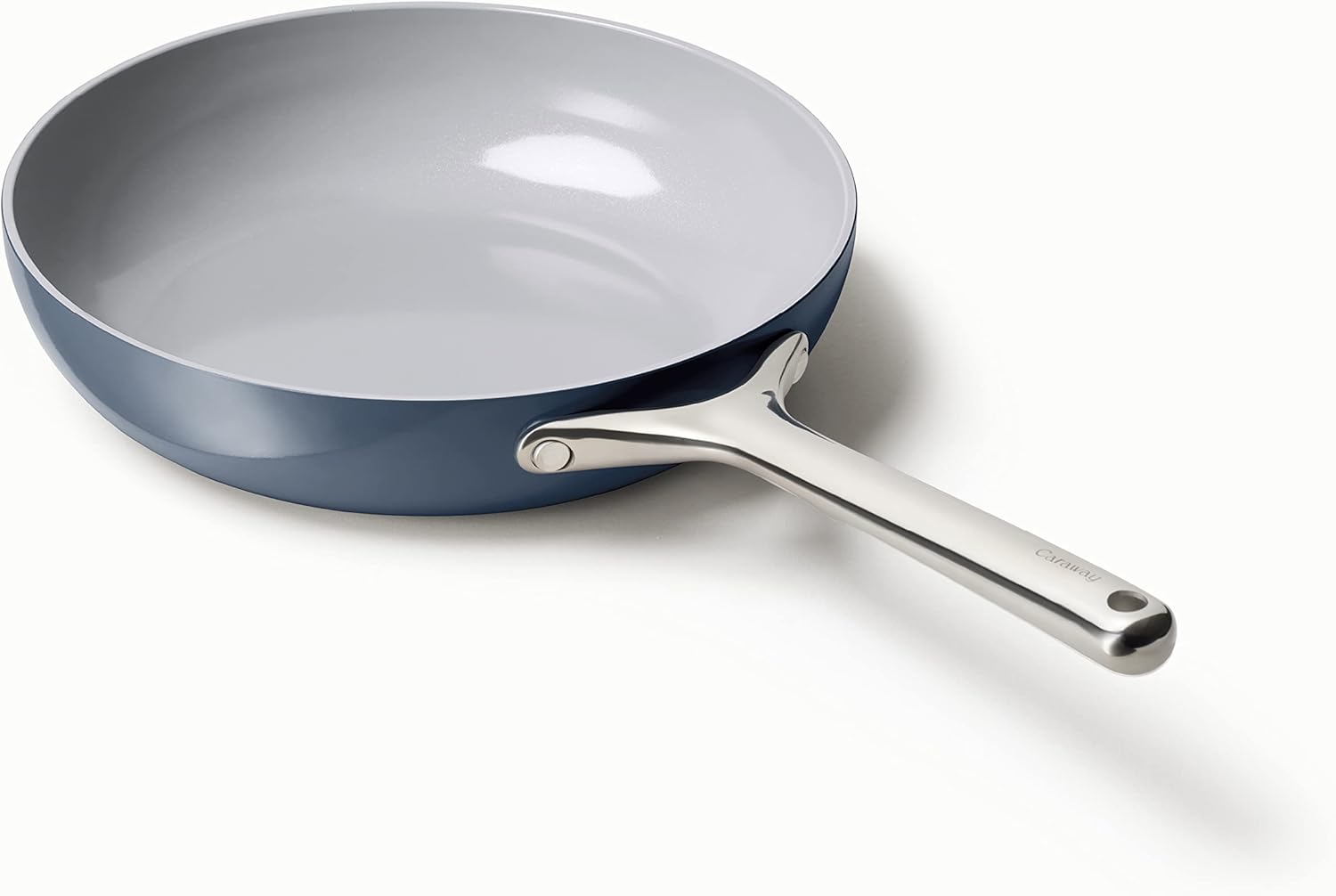
Material: Aluminum body with ceramic non-stick coating (no PTFE, PFOA, or PFAS)
Size: 10.5 inches
Price: ~$95-145
Rating: 4.4/5 stars (3,000+ reviews)
Caraway has become the poster child for non-toxic cookware, and for good reason. Their ceramic coating is free of PTFE, PFOA, PFAS, lead, and cadmium. It delivers genuine non-stick performance – eggs slide right off – without any forever chemicals. The pan is also genuinely beautiful, which helps since you will want to leave it on your stovetop.
Key features:
- Ceramic non-stick coating – PTFE, PFOA, and PFAS-free
- Aluminum core for fast, even heating
- Stainless steel handle stays cool
- Compatible with all cooktops including induction
- Oven safe to 550F
- Available in 10+ colors
Pros: True non-stick without PFAS, beautiful design, lightweight, easy cleanup, oven safe, induction compatible
Cons: Ceramic coating wears out (expect 1-3 years of peak non-stick), hand wash recommended, not ideal for very high heat searing, more expensive than traditional non-stick
⚠️ Coating disclaimer: Ceramic non-stick coatings are genuinely PFAS-free, but they do not last as long as PTFE coatings. Most users report 1-3 years of excellent non-stick performance with daily use. After that, the coating still works but becomes less slippery. This is the trade-off for avoiding forever chemicals.
5. GreenPan Valencia Pro 12″ Frying Pan – Best Ceramic for High Heat
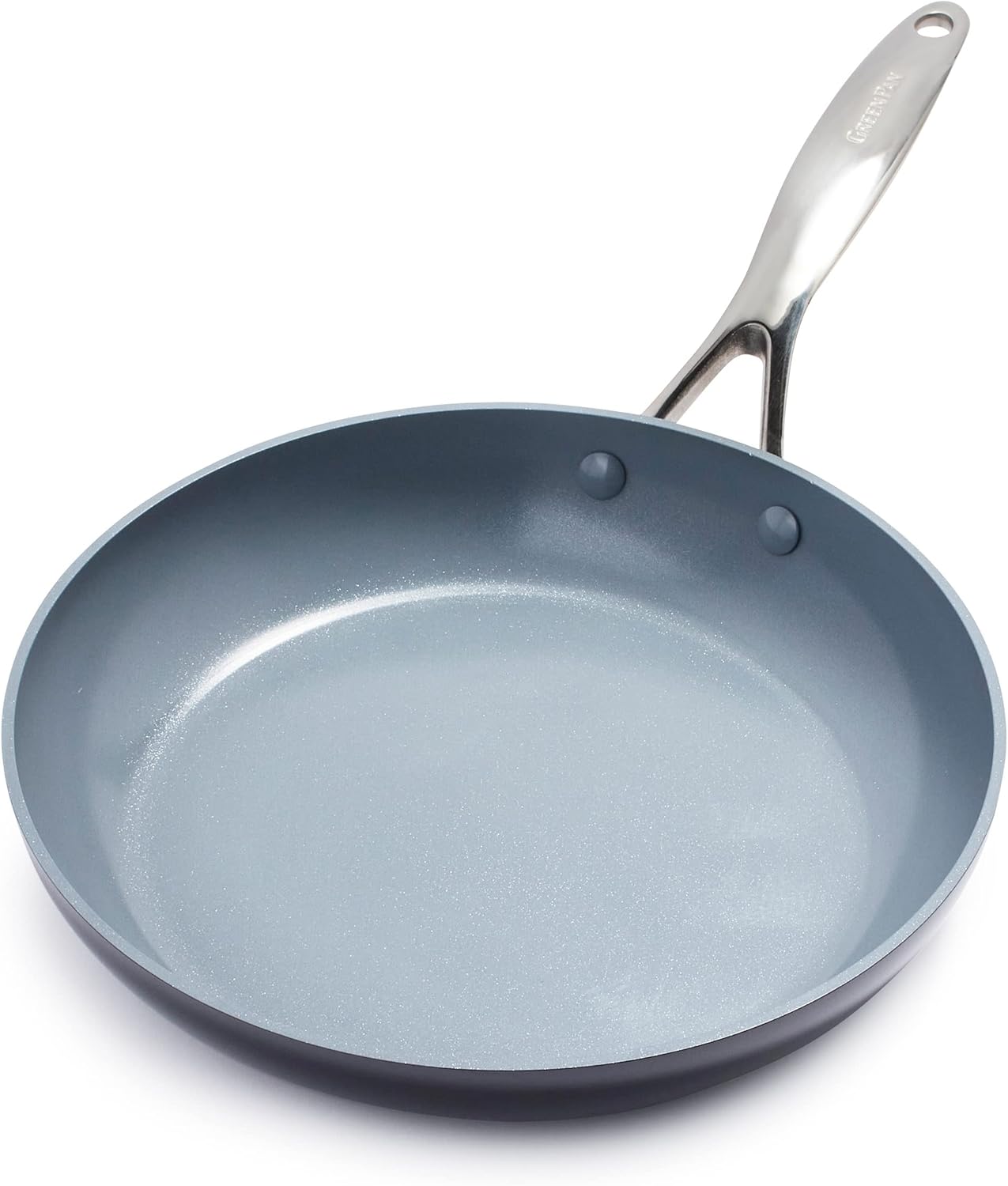
Material: Hard-anodized aluminum with Thermolon Minerals ceramic coating
Size: 12 inches
Price: ~$55-75
Rating: 4.5/5 stars (4,000+ reviews)
GreenPan pioneered ceramic non-stick coatings back in 2007. The Valencia Pro is their most durable line, featuring a hard-anodized aluminum body with Thermolon Minerals ceramic coating reinforced with diamonds. The Magneto base delivers excellent induction performance, and the whole thing is dishwasher safe and oven safe to 600F.
Key features:
- Thermolon Minerals ceramic coating – PFAS-free since 2007
- Hard-anodized aluminum body for extra durability
- Diamond-reinforced coating for longer non-stick life
- Magneto induction base
- Oven and broiler safe to 600F
- Dishwasher safe
Pros: Most durable ceramic coating available, dishwasher safe, great value, oven safe to 600F, excellent induction performance, trusted brand
Cons: Ceramic coating still wears out eventually, hard-anodized exterior is only available in gray, heavier than basic ceramic pans
6. Our Place Always Pan 2.0 – Best Multi-Use Ceramic Pan
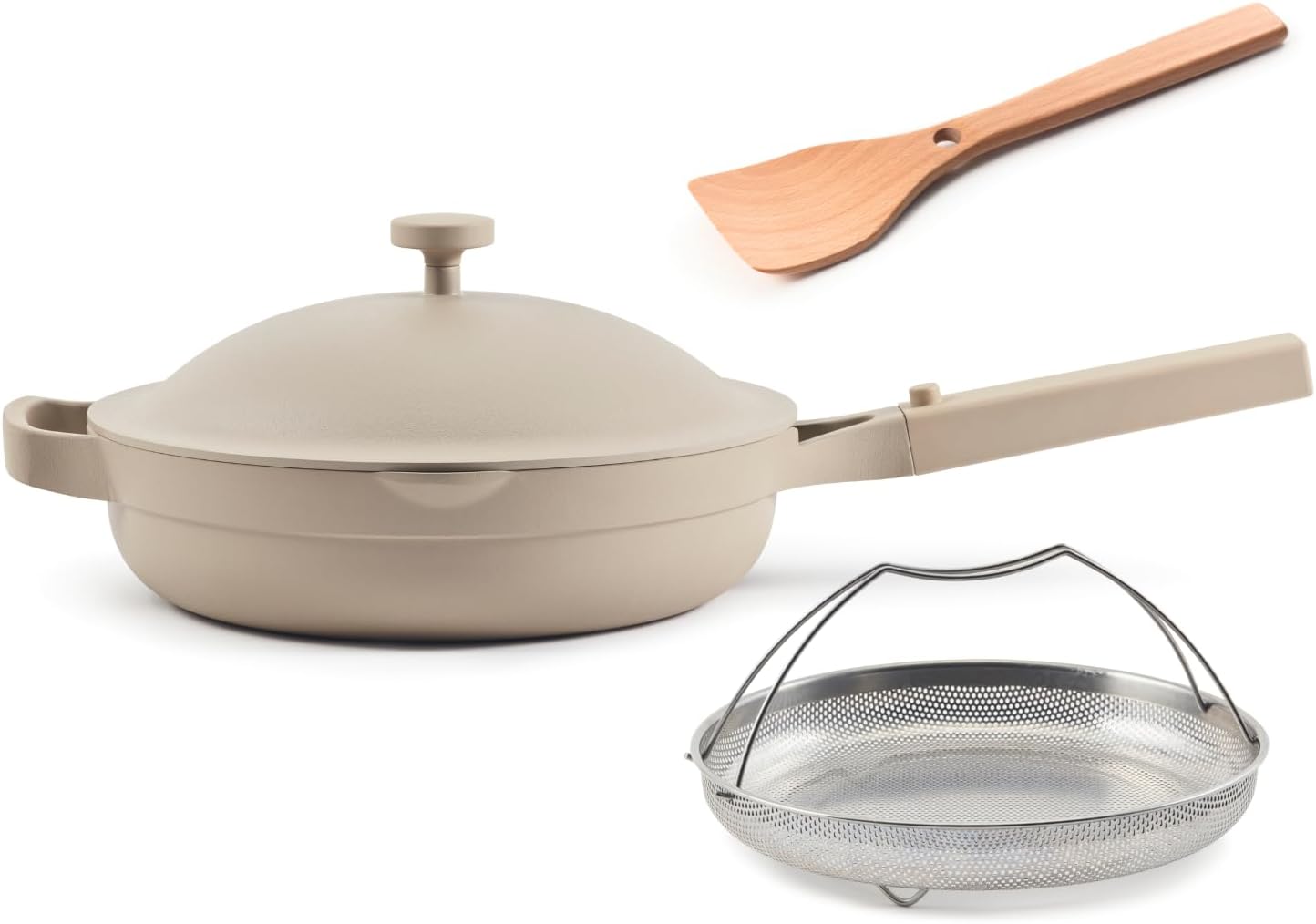
Material: Aluminum body with ceramic non-stick coating (PFAS-free)
Size: 10.5 inches
Price: ~$60-100
Rating: 4.3/5 stars (5,000+ reviews)
The Always Pan went viral for a reason – it genuinely replaces multiple pieces of cookware. It comes with a modular lid, built-in steamer basket, and a beechwood spatula. The ceramic coating is PFAS-free, and the 10-in-1 design means you can braise, sear, steam, strain, saute, fry, boil, bake, roast, and serve all in one pan.
Key features:
- 10-in-1 functionality replaces multiple pots and pans
- Ceramic non-stick coating – PFAS, PTFE, and PFOA-free
- Includes modular lid, steamer basket, and beechwood spatula
- Induction compatible
- Oven safe to 450F
- Available in 15+ colors
Pros: Replaces multiple pieces of cookware, beautiful design, includes accessories, lightweight, PFAS-free, great for small kitchens
Cons: Smaller cooking surface, ceramic coating wears out, not ideal for serious searing, spatula is not dishwasher safe, slightly shallow sides for some tasks
Best Carbon Steel Cookware
7. de Buyer Mineral B 12.5″ Carbon Steel Fry Pan – Best Carbon Steel
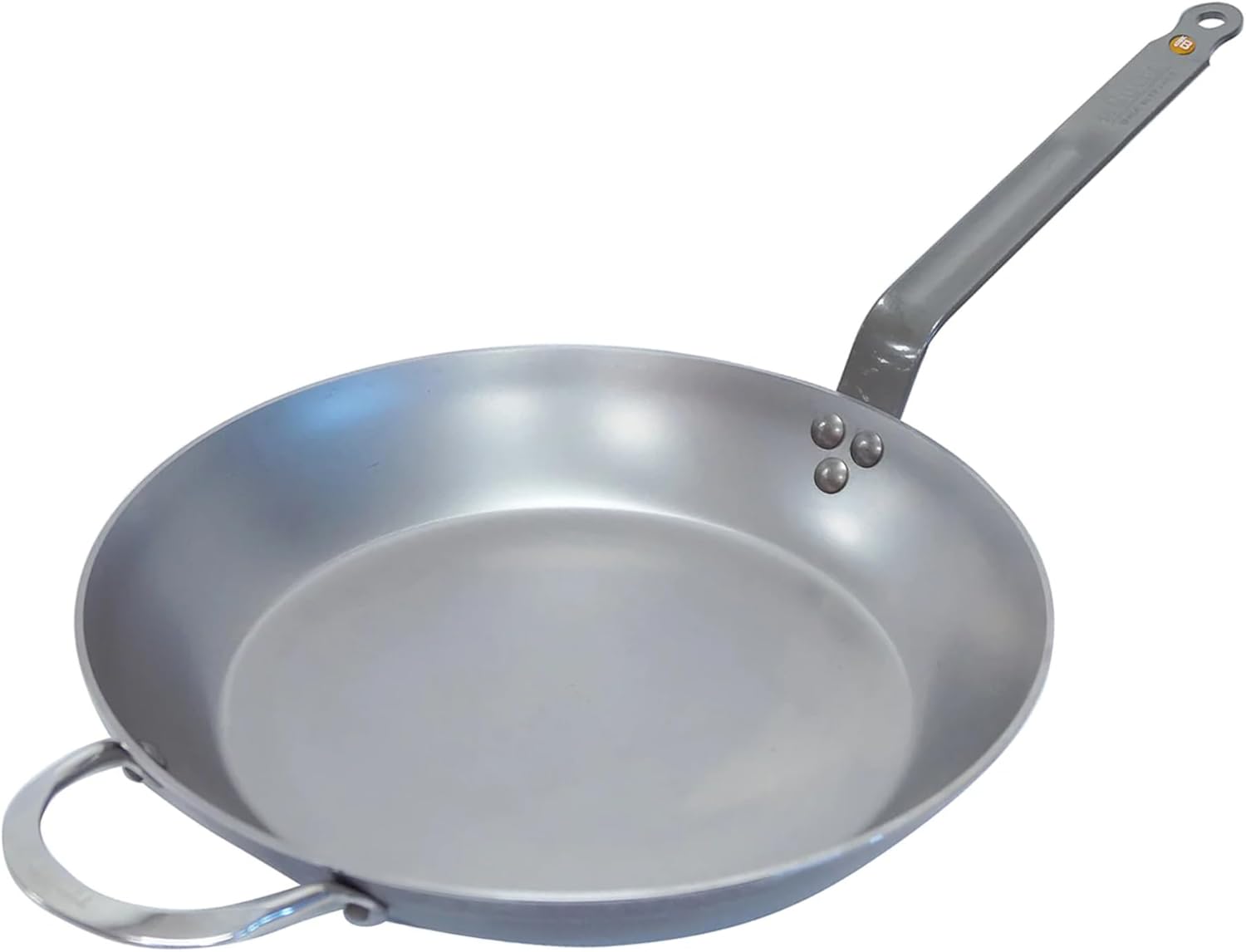
Material: 99% pure iron carbon steel with beeswax finish
Size: 12.5 inches (9-inch cooking surface)
Price: ~$60-80
Rating: 4.5/5 stars (7,000+ reviews)
Carbon steel is the secret weapon of professional French kitchens – and de Buyer is the brand they trust. The Mineral B is made from 99% pure iron with a natural beeswax coating (the “B” stands for beeswax) that protects it during shipping and makes initial seasoning easier. Like cast iron, it develops a natural non-stick patina over time. Unlike cast iron, it is significantly lighter and heats up faster.
Key features:
- 99% pure iron – zero synthetic coatings
- Natural beeswax finish for shipping protection
- Develops natural non-stick seasoning with use
- Made in France
- Compatible with all cooktops including induction
- Oven safe to any temperature
- Lighter than cast iron with faster heat response
Pros: Lighter than cast iron, excellent heat response, naturally non-stick when seasoned, professional-grade performance, made in France, no synthetic chemicals
Cons: Requires seasoning (like cast iron), not dishwasher safe, reacts with acidic foods, handle gets hot, can rust if not dried properly
Material Comparison: Pros and Cons at a Glance
Cast Iron
Best for: Searing, baking, slow cooking, oven-to-table serving
Pros: Lasts forever, naturally non-stick when seasoned, affordable (Lodge), excellent heat retention, adds dietary iron
Cons: Heavy, requires seasoning, reacts with acidic foods (unless enameled), slow to heat, not dishwasher safe
Stainless Steel
Best for: Searing, deglazing, pan sauces, acidic foods, anything that needs fond
Pros: Completely non-reactive, dishwasher safe, no maintenance, professional performance, lasts forever
Cons: Food sticks without proper technique, no non-stick properties, expensive (All-Clad), learning curve
Ceramic Non-Stick
Best for: Eggs, pancakes, fish, everyday cooking, beginners
Pros: Easy non-stick cooking, PFAS-free, lightweight, low maintenance, beautiful designs
Cons: Coating wears out (1-3 years), not ideal for high-heat searing, less durable than metal pans, hand wash usually recommended
Carbon Steel
Best for: High-heat searing, stir-frying, crepes, omelets, professional cooking
Pros: Lighter than cast iron, faster heat response, naturally non-stick when seasoned, handles extreme heat, professional favorite
Cons: Requires seasoning, reacts with acidic foods, can rust, handle gets hot, learning curve
Care Tips for Each Material
Cast Iron Care
- Clean with hot water and a stiff brush or chain mail scrubber. A small amount of soap is fine – the old “no soap” rule is outdated.
- Dry immediately and thoroughly after washing. A minute on a warm burner works perfectly.
- Apply a thin layer of oil after drying to maintain the seasoning.
- If food starts sticking, re-season: coat with a thin layer of flaxseed or vegetable oil and bake upside down at 450F for one hour.
- Store in a dry place. If stacking, place a paper towel between pans.
Stainless Steel Care
- Preheat the pan before adding oil, then add food once the oil shimmers. This is the key to preventing sticking.
- Use the “water test” – drop water on the preheated pan. If it forms a single ball that rolls around, the pan is ready for oil.
- Deglaze stuck-on food with liquid (wine, broth, water) to make a pan sauce and easy cleanup.
- Bar Keeper’s Friend is your best friend for removing discoloration and stuck-on residue.
- Dishwasher safe, but hand washing preserves the finish longer.
Ceramic Non-Stick Care
- Use low to medium heat only. High heat degrades the ceramic coating faster than anything else.
- Use wooden, silicone, or nylon utensils – metal scratches the coating.
- Hand wash with a soft sponge. Dishwashers can shorten the coating’s lifespan.
- Do not use cooking spray (like PAM). The propellants build up on the coating and create a sticky residue. Use real oil or butter.
- Accept that the coating is consumable. Budget for replacement every 2-3 years with heavy use.
Carbon Steel Care
- Season before first use: remove the beeswax coating (for de Buyer) by heating, then build seasoning layers with thin coats of high-smoke-point oil.
- Clean like cast iron – hot water, stiff brush, dry immediately, light oil coat.
- The pan will turn black over time. This is good – it means the seasoning is building up.
- If it rusts, scrub with steel wool and re-season. It is not ruined.
- Cook fatty foods (bacon, sausage) in the first few weeks to accelerate seasoning.
Frequently Asked Questions
Is ceramic non-stick cookware truly non-toxic?
Yes. Ceramic coatings used by brands like Caraway, GreenPan, and Our Place are made from inorganic minerals (primarily silicon dioxide) and do not contain PTFE, PFOA, PFAS, lead, or cadmium. They are genuinely non-toxic. The trade-off is durability – ceramic coatings wear out faster than PTFE coatings.
Can I get non-stick performance without chemical coatings?
Absolutely. A well-seasoned cast iron or carbon steel pan is naturally non-stick – eggs will slide right off. It takes a few weeks of regular cooking to build up the seasoning, but once established, it rivals synthetic non-stick coatings. Stainless steel can also be non-stick with proper preheating technique.
Is cast iron cookware safe? What about iron leaching?
Cast iron is extremely safe. It can leach small amounts of dietary iron into food, especially when cooking acidic foods. For most people, this is a benefit – iron deficiency is common. If you have hemochromatosis (iron overload disorder), use enameled cast iron instead, which prevents iron transfer.
Why is stainless steel cookware so expensive?
Quality stainless steel cookware (like All-Clad D3) uses a multi-layer bonded construction with an aluminum or copper core for heat conductivity sandwiched between stainless steel layers. This manufacturing process is complex and expensive. Budget options like Cuisinart and Tramontina offer tri-ply construction at lower prices if All-Clad is out of range.
How long does ceramic non-stick last?
With proper care (low-medium heat, hand wash, no metal utensils, no cooking spray), most ceramic non-stick pans maintain good performance for 1-3 years of daily use. The non-stick properties gradually decline rather than failing suddenly. After 2-3 years, the pan still works but behaves more like stainless steel.
What is the healthiest cookware material?
All four materials in this guide – cast iron, stainless steel, ceramic, and carbon steel – are healthy choices that avoid PFAS. Stainless steel is the most completely inert (nothing leaches into food). Cast iron and carbon steel add small amounts of dietary iron. Ceramic coatings are non-toxic but are the newest technology with the least long-term research.
Do professional chefs use non-stick pans?
Most professional kitchens primarily use stainless steel and carbon steel. Non-stick pans (whether PTFE or ceramic) have a limited role – mainly for delicate items like eggs and fish. The reason is durability: professional kitchens destroy non-stick coatings quickly with high heat and heavy use. Carbon steel gives chefs non-stick performance that actually lasts.
Can I put cast iron in the dishwasher?
No. The dishwasher will strip the seasoning and likely cause rusting. Hand wash with hot water and a brush, dry immediately, and apply a thin coat of oil. This takes about 60 seconds and keeps your cast iron in perfect condition.
The Bottom Line
If you want one pan that does everything well and costs almost nothing, get the Lodge 12″ Cast Iron Skillet. It is the best value in cookware, period.
If you want the easiest transition from traditional non-stick, go with the GreenPan Valencia Pro or Caraway Frying Pan. They cook like non-stick without the PFAS.
If you want professional-grade cookware that will outlast you, the All-Clad D3 or de Buyer Mineral B are what the pros use.
And if you want something beautiful that replaces half your cabinet, the Our Place Always Pan earns its hype.
The most important thing? Stop cooking on scratched, flaking non-stick pans. Whatever material you choose from this list, your food – and your body – will thank you.
Disclosure: This article contains affiliate links. If you purchase through our links, we may earn a small commission at no extra cost to you. We only recommend products we genuinely believe in. See our full disclosure.