
Last updated: February 2026 · Written by the No Plastic Living team
📦 Quick Answer
Yes, food-grade silicone is generally safe – and significantly safer than plastic for food contact. Silicone contains no BPA, phthalates, or microplastic-shedding concerns. The FDA and European food safety authorities approve it for food use. Some siloxane compounds can migrate at very high temperatures, but quality silicone from reputable brands shows minimal leaching well below safety limits. For anything involving heat, silicone beats plastic hands-down. For simple storage where flexibility isn’t needed, glass remains the gold standard.
You’ve swapped your plastic containers for glass. Ditched the disposable bags. Maybe even jumped on the beeswax wrap train. But then you spot those colorful silicone bags, muffin cups, and spatulas everywhere – and wonder: wait, is silicone actually safe? Or is it just plastic wearing a different costume?
Let’s dig into what silicone actually is, what the research says about its safety, and when it makes sense to choose silicone over plastic (or skip it entirely).
What Is Silicone, Exactly?
Here’s where things get interesting. Silicone isn’t plastic – but it’s not exactly “natural” either.
Silicone is a synthetic polymer made primarily from silica (sand) combined with oxygen, carbon, and hydrogen. The technical name is polysiloxane, and it’s been around since the 1940s. Unlike petroleum-based plastics, silicone’s backbone is silicon-oxygen bonds rather than carbon-carbon bonds.
This molecular difference matters. Those silicon-oxygen bonds are incredibly stable – they don’t break down easily under heat, cold, or UV exposure. It’s why silicone shows up in everything from medical implants to aerospace engineering to your kitchen drawer.
The bottom line: Silicone is a hybrid – part synthetic, part mineral-derived. It’s not plastic, but it’s not a “natural” material like glass, wood, or stainless steel either.
Is Silicone Safe for Food Contact?
The short answer: food-grade silicone is generally considered safe by major regulatory bodies. But let’s look at what that actually means.
What the Research Shows
The FDA has approved silicone as a food-safe material. The European Food Safety Authority (EFSA) has also evaluated silicone and found it acceptable for food contact applications.
Food-grade silicone is rated to withstand temperatures from -40°F to 500°F (-40°C to 260°C) without degrading or leaching chemicals. That’s a much wider safe range than most plastics, which can start breaking down at relatively low temperatures.
A 2012 study published in Food Additives & Contaminants tested silicone bakeware and found that while some siloxanes (silicone compounds) did migrate into food at high temperatures, the levels were below established safety thresholds. The migration was highest during first use and decreased significantly with subsequent uses.
No BPA, No Phthalates, No BPS
One clear advantage: silicone doesn’t contain the chemicals that make plastic problematic.
- No BPA (bisphenol A) – the endocrine disruptor found in many plastics
- No phthalates – the plasticizers linked to hormone disruption
- No BPS (bisphenol S) – the “BPA-free” replacement that turned out to be just as concerning
Silicone’s chemical structure simply doesn’t require these additives. That’s a meaningful win if you’re trying to reduce your exposure to hormone-disrupting chemicals.
The Siloxane Question
The main concern researchers have flagged with silicone involves cyclic siloxanes – specifically compounds called D4, D5, and D6. These are volatile compounds that can be released from silicone products, particularly when heated.
D4 (octamethylcyclotetrasiloxane) has been classified as an endocrine disruptor in some studies and is restricted in certain EU applications. D5 and D6 are considered less concerning but are still under scrutiny for potential environmental persistence.
Here’s the important context: the siloxane migration studies have found levels well below safety limits set by regulatory agencies. High-quality, food-grade silicone from reputable manufacturers typically contains minimal volatile siloxanes.
The practical takeaway: Silicone appears significantly safer than plastic for food contact, but it’s not completely inert. Quality matters a lot.
Silicone vs Plastic: Head-to-Head Comparison
Let’s break down how these materials actually stack up:
| Factor | Silicone | Plastic |
|---|---|---|
| Heat resistance | -40°F to 500°F | Varies widely; many degrade at 150-200°F |
| Chemical leaching | Minimal (mostly siloxanes at high heat) | BPA, phthalates, microplastics, especially when heated |
| Microplastics | Does not shed microplastics | Major source of microplastic contamination |
| Durability | Extremely durable, doesn’t crack or become brittle | Degrades over time, especially with heat/UV |
| Recyclability | Not widely recyclable (specialized facilities only) | Technically recyclable but often isn’t |
| Biodegradability | Does not biodegrade | Does not biodegrade |
| Dishwasher safe | Yes | Depends on plastic type |
| Microwave safe | Yes | Many plastics are not |
| Freezer safe | Yes | Some plastics crack |
When Silicone Wins
High-heat applications: Baking, cooking, hot food storage. Silicone handles heat that would cause plastic to warp, leach chemicals, or melt.
Long-term durability: Silicone doesn’t degrade, crack, or become brittle over time like plastic does. A good silicone product can last decades.
Flexibility requirements: Reusable bags, ice cube trays, baking molds – anywhere you need to flex and squeeze without worrying about microplastic shedding.
Reducing microplastic exposure: This might be silicone’s biggest advantage. It doesn’t fragment into microplastics the way plastic does.
When Silicone Isn’t the Best Choice
When glass or stainless steel work: For simple food storage, glass and stainless steel are more inert than silicone. If you don’t need the flexibility or heat resistance, reach for glass first.
Very high temperatures: Above 500°F, silicone can start to degrade. For direct-flame contact or broiling, stick with metal or glass.
Environmental concerns: Silicone’s durability is a double-edged sword. It lasts forever – including in landfills. It’s not biodegradable and not easily recyclable.
How to Choose Safe Silicone Products
Not all silicone is created equal. Here’s how to find the good stuff:
Look for Food-Grade Certification
Food-grade silicone should be clearly labeled. In the US, look for “FDA approved” or “FDA compliant.” In Europe, look for products that comply with EU regulation 1935/2004 for food contact materials.
The Pinch Test
High-quality silicone should not change color when you pinch and twist it. If you see white showing through when stretched, that’s a sign of fillers – usually cheap plastic additives that compromise the silicone’s safety and durability.
Avoid Bright Colors (For Food Use)
For items that will contact food at high temperatures, stick with clear, white, or muted colors. Brightly colored silicone requires additional pigments, and while most are safe, it’s an unnecessary variable.
Buy From Reputable Brands
This matters more with silicone than with simpler materials. Companies that specialize in food-safe silicone invest in quality control and third-party testing. Random Amazon sellers with no brand reputation? Roll of the dice.
Check for Platinum-Cured Silicone
Silicone can be cured (hardened) using either peroxide or platinum catalysts. Platinum-cured silicone is considered higher quality – it has better heat resistance, longer lifespan, and no residual byproducts. Premium brands typically use platinum curing.
Best Uses for Silicone in a Plastic-Free Kitchen
Based on the research, here’s where silicone makes the most sense:
Great Silicone Swaps
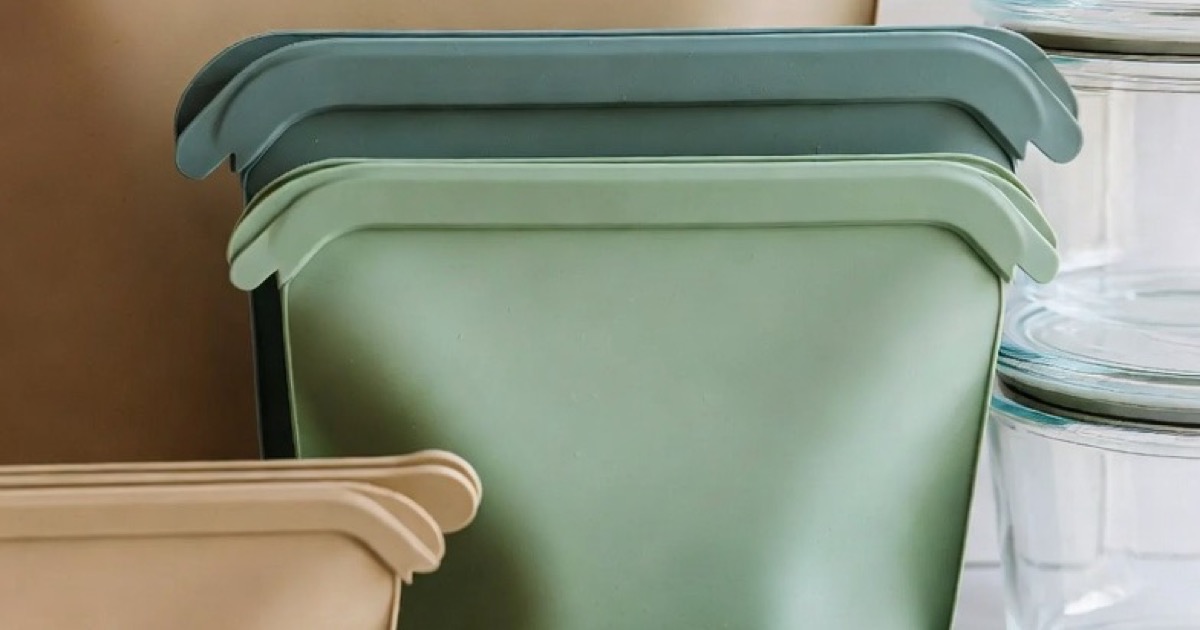
Reusable silicone bags – Perfect replacement for plastic storage bags. Heat-stable for sous vide cooking, freezer-safe, and no microplastics leaching into your food.
- Stasher Reusable Silicone Bags – Check price on Amazon
Silicone baking mats – Replace parchment paper and foil for a reusable, non-stick surface. Handles oven temperatures safely.
- Silpat Premium Baking Mat – Check price on Amazon
Silicone ice cube trays – Easy release, no cracking, lasts forever. Much better than flimsy plastic trays.
Silicone stretch lids – Great for covering bowls and half-used produce. Flexible and reusable.
- Silicone Stretch Lids (6-pack) – Check price on Amazon
Silicone baby products – Bibs, teethers, placemats. The flexibility of plastic without the chemical concerns during that critical developmental window.
Skip Silicone Here
Long-term pantry storage – Glass jars are better. More inert, easier to see contents, and actually recyclable.
Water bottles – Stainless steel or glass outperforms silicone for beverages.
Cutting boards – Wood or bamboo are better choices.
The Environmental Reality
Let’s be honest about silicone’s environmental profile – it’s complicated.
The good: Silicone is durable enough to replace hundreds of single-use plastic items over its lifetime. One silicone bag replacing years of disposable plastic bags is a net positive.
The bad: Silicone doesn’t biodegrade. Ever. And while some specialized recycling programs exist, most silicone ends up in landfills. It’s not leaching toxins there, but it’s also not going anywhere.
The practical view: If you’re replacing single-use plastics with durable silicone products you’ll use for years, you’re making progress. If you’re buying silicone versions of things you could handle with glass, metal, or simply owning less stuff, you’re adding waste.
The Bottom Line
Here’s my honest take:
Silicone is genuinely safer than plastic for food contact – especially for anything involving heat. The absence of BPA, phthalates, and microplastic shedding gives it a meaningful edge. The research on siloxane migration doesn’t raise red flags at normal use temperatures from quality products.
Silicone makes sense for specific applications where you need flexibility, heat resistance, and durability that glass and metal can’t provide. Reusable bags, baking mats, ice trays, and baby products are solid use cases.
Silicone isn’t a perfect solution. It’s not recyclable in practice, doesn’t biodegrade, and high-quality products aren’t cheap. For simple food storage where you don’t need flexibility, glass remains the gold standard.
Quality matters enormously. Cheap silicone with fillers defeats the purpose. Stick with reputable brands, check for food-grade certification, and do the pinch test.
The health-first approach: swap out plastics that contact your food – especially anything you heat – for glass first, quality silicone second. Save the silicone for where its flexibility and durability actually add value.
You’re not choosing between perfect and terrible. You’re choosing between better and worse. And silicone, used thoughtfully, is genuinely better than the plastic it’s replacing.
Related reading:
- Best Reusable Food Storage Containers
- Is Microwaving Plastic Safe?
- BPA-Free Water Bottles: Are They Really Safe?
This article is for informational purposes only and does not constitute medical advice. Consult a healthcare professional for personal health decisions.