
Best Reusable Food Storage Containers in 2026: Glass vs Stainless Steel vs Silicone
If you have ever microwaved leftovers in a plastic container and noticed that weird chemical smell, you already know something is off. That instinct is backed by science. Plastic food containers can leach harmful chemicals into your food, especially when heated. The good news? There are better options, and they last way longer too.
In this guide, we break down the three best plastic-free materials for food storage – glass, stainless steel, and silicone – and recommend specific products worth your money in 2026.
Quick Navigation
Why Ditch Plastic Food Containers?
Before we get into the alternatives, let’s talk about why plastic containers are a problem in the first place.
A landmark 2022 study published in Environment International found that microplastics are now present in human blood, with PET and polystyrene being the most common types detected. Another study from the National Institute of Environmental Health Sciences confirmed that BPA and phthalates – both common in plastic food containers – act as endocrine disruptors, interfering with hormone function even at low doses.
And “BPA-free” does not mean safe. Research published in Environmental Health Perspectives found that BPA replacements like BPS and BPF show similar estrogenic activity. You are not dodging the bullet by switching to a different plastic – you are just switching bullets.
The bottom line: if you store food in plastic, you are likely ingesting microplastics and chemical additives every day. Glass, stainless steel, and silicone offer genuinely safer alternatives.
Glass Food Storage Containers
Glass is the gold standard for food storage. It is chemically inert, meaning it does not react with food or leach any substances, regardless of temperature. You can go from freezer to oven to dishwasher without worry.
Pros of Glass
- Completely non-reactive and non-porous
- Does not stain or absorb odors
- Microwave, oven, freezer, and dishwasher safe
- You can see what is inside without opening the lid
- Lasts for decades with proper care
- Recyclable at end of life
Cons of Glass
- Heavier than plastic or steel alternatives
- Can shatter if dropped (though borosilicate glass is more durable)
- Some lids still contain plastic or silicone (check before buying)
- Higher upfront cost than plastic sets
Best Glass Food Storage Containers in 2026
On this site, “best” means the lid is not plastic. The full glass ranking is in Best Glass Food Storage Containers in 2026: The Lid Is the Catch.
Best Overall: Bentgo Signature Glass
Borosilicate glass bowls with glass lids and a silicone gasket. No plastic in the lid. You can microwave with the lid on because the lid is glass. That is the everyday pick.
View Bentgo Signature on Amazon
Best Budget: IKEA 365+ Glass Containers with Bamboo Lids
If you want solid glass storage without spending a lot, IKEA 365+ is the move. Buy the glass box and the bamboo lid separately. Skip the plastic lid on the same shelf. Bamboo is not a soup-in-a-bag seal. It is fine for fridge leftovers, and nothing plastic touches the food.
- Very affordable per piece
- Multiple shapes and sizes
- Bamboo lids (choose these over plastic)
- Widely available at IKEA stores
Matching set: Caraway Glass Food Storage
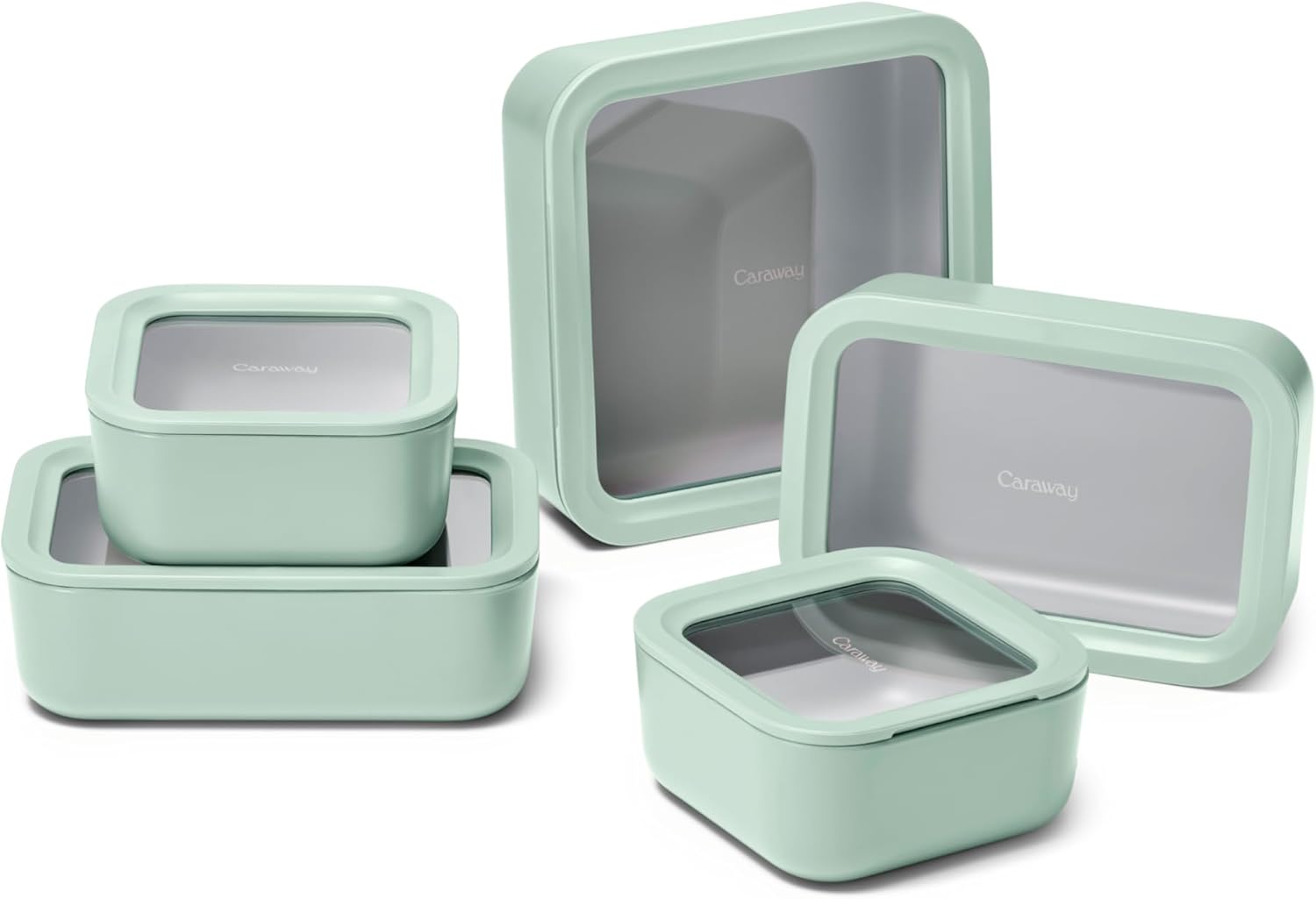
Ceramic-coated steel lids, no plastic, a rack so the lids do not pile up. Oven-safe borosilicate. You pay for the catalog look. Still a real plastic-free pick if you already like their cookware.
Pyrex and Rubbermaid: testers love the leakproof plastic lids. This site does not call those “best.” If a plastic-lid set is the only way the takeout tub leaves the fridge this month, you can use one as a stopgap. Never microwave with the lid on. If food touches the lid, you still have plastic-to-food contact. Details in the glass containers article.
Stainless Steel Food Storage Containers
Stainless steel is the toughest option on this list. It will not break, crack, or shatter no matter how many times your kids drop it on the kitchen floor. It is also completely non-reactive with food.
Pros of Stainless Steel
- Virtually indestructible
- Lightweight compared to glass
- Non-reactive and non-porous
- Does not leach chemicals at any temperature
- Great for kids’ lunches and travel
- Recyclable at end of life
Cons of Stainless Steel
- Not microwave safe
- Cannot see contents without opening
- Can dent (though this does not affect function)
- Higher upfront cost
- Some lower-quality options may contain nickel (look for 18/8 or 304 grade)
Best Stainless Steel Food Storage Containers in 2026
Best Overall: LunchBots Large Cinco Stainless Steel Bento Box
LunchBots makes some of the best stainless steel food containers on the market. They are built like tanks, come in tons of sizes, and are a favorite among parents packing school lunches. The brand uses 304 (18/8) stainless steel, which is the food-safe standard. Best of all: 100% stainless steel interior including the lid – no plastic touches your food.
- 18/8 food-grade stainless steel
- 100% stainless steel interior and lid (plastic-free)
- Five compartment design for variety
- Dishwasher safe
- Made to last a lifetime
Best for Leftovers: Klean Kanteen Rise Food Boxes
Klean Kanteen is known for water bottles, but their Rise Food Box line is equally impressive. Made from certified 90% post-consumer recycled stainless steel with food-grade silicone seals, these containers are leakproof, microwave-safe (without the lid), and completely plastic-free.
- Made from 90% post-consumer recycled 18/8 stainless steel
- Food-grade silicone seals (no plastic)
- Leakproof design
- Microwave and oven safe (without lid)
- Available in snack, lunch, and big meal sizes
- Lifetime warranty
Best for Bento-Style Lunches: ECOlunchbox Three-in-One
This classic bento-style set includes three nesting stainless steel containers that clip together. It is perfect for packing a complete lunch without any plastic. All stainless steel construction means nothing but food-safe metal touches your meal.
- Three tiers clip together
- Compact and portable
- All stainless steel construction
- Great for adults and older kids
Silicone Food Storage Containers and Bags
Silicone occupies an interesting middle ground. It is flexible like plastic but far more heat-resistant, and high-quality food-grade silicone does not leach harmful chemicals. It is especially popular as a replacement for single-use plastic bags.
Pros of Silicone
- Flexible and lightweight
- Heat resistant up to 400-500F depending on grade
- Freezer safe
- Collapsible options save cabinet space
- Replaces zip-top plastic bags
- Dishwasher safe
Cons of Silicone
- Can absorb strong odors over time (tomato sauce is notorious)
- Some cheap silicone products contain fillers – always buy food-grade platinum silicone
- Not as long-lasting as glass or steel
- Can feel “greasy” to some users
- Harder to recycle at end of life
A Note on Silicone Safety
Not all silicone is created equal. Look for “platinum-cured” or “food-grade platinum silicone” on the label. A 2012 study in Food Additives and Contaminants found that lower-grade silicones can release siloxanes when heated, though the levels were generally below safety thresholds. Platinum-cured silicone shows minimal to no migration of chemicals into food.
A simple test: twist or pinch the silicone. If white shows through, it likely contains fillers and is lower quality. Pure silicone will not change color when flexed.
Best Silicone Food Storage in 2026
Best Overall: Stasher Reusable Silicone Bags
Stasher basically created the reusable silicone bag category. Their bags are made from 100% platinum food-grade silicone with no plastic parts whatsoever. The Pinch-Loc seal keeps things airtight without any plastic clips or zippers. They work for everything from sous vide cooking to freezer storage.
- 100% platinum food-grade silicone
- Pinch-Loc airtight seal (no plastic parts)
- Microwave, dishwasher, freezer, and oven safe (up to 425F)
- Available in multiple sizes (pocket, snack, sandwich, quart, half-gallon)
- Self-sealing design
Best Stand-Up Containers: Zip Top Silicone Containers
Zip Top containers stand up on their own and stay open for easy filling, then zip closed. They are made in the USA from 100% platinum silicone – completely plastic-free. Available in cups, dishes, and bag shapes to fit any storage need.
- Made in the USA
- 100% platinum silicone (plastic-free)
- Stands up and stays open for filling
- Dishwasher, microwave, and freezer safe
- Multiple shapes available (cups, dishes, bags)
Best for Freezer Storage: Souper Cubes Silicone Freezer Trays
Souper Cubes solve a specific problem beautifully. Freeze soups, sauces, broths, and baby food in perfect portions, then pop them out and store or reheat as needed. They eliminate the need for plastic freezer bags entirely. The trays come with silicone lids for stacking.
- Perfect portion freezing
- Easy release design
- Available in 2-tablespoon, 1/2-cup, 1-cup, and 2-cup sizes
- Food-grade silicone with silicone lids
- Oven safe for reheating
- Lifetime warranty
Glass vs Stainless Steel vs Silicone: Which Should You Choose?
The best material depends on how you plan to use it. Here is a quick breakdown to help you decide.
Choose glass if you:
- Microwave leftovers regularly
- Want to see contents at a glance
- Primarily store food at home
- Prefer oven-to-table serving
- Want the most chemically inert option
Choose stainless steel if you:
- Pack lunches for work or school
- Need something drop-proof and durable
- Travel with food often
- Want to keep food hot or cold (insulated options)
- Have kids who will inevitably drop things
Choose silicone if you:
- Want to replace single-use plastic bags
- Have limited cabinet space (collapsible options)
- Need flexible, squeezable containers
- Do a lot of freezer meal prep
- Want something lightweight for travel
The Bottom Line
Switching from plastic to glass, stainless steel, or silicone food storage is one of the easiest ways to reduce your daily chemical exposure. Yes, the upfront cost is higher than a cheap plastic set, but these materials last for years – often decades – making them more economical in the long run.
Start with whatever fits your lifestyle best. If you microwave often, go with glass (with non-plastic lids if possible). If you pack lunches, stainless steel is your friend. If you want to ditch zip-top bags, silicone is the answer.
Your body – and the planet – will thank you.