
Last updated: February 2026 · Written by the No Plastic Living team
📦 Quick Answer
Plastic cutting boards release millions of microplastic particles into your food every year. A 2023 study found that a single polyethylene board can shed 14 to 71 million microplastics annually, while polypropylene boards release up to 79 million. Switching to wood, bamboo, or wood-fiber composite boards is a straightforward way to cut this exposure dramatically.
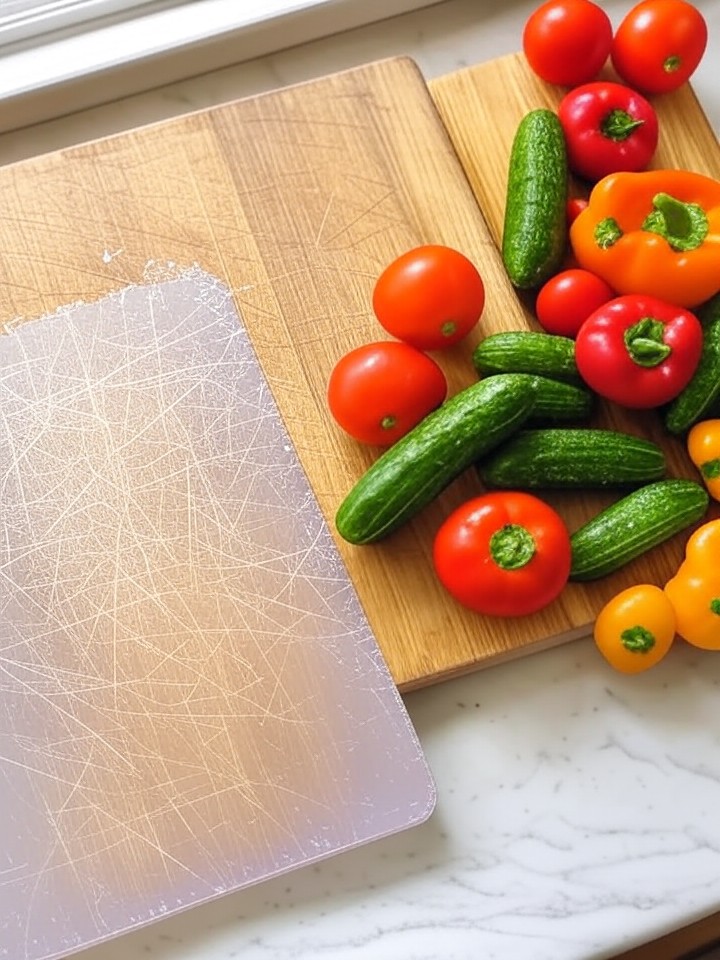
Here’s something that might make you look at your kitchen counter differently: every time you chop an onion, dice a carrot, or mince garlic on a plastic cutting board, your knife is carving out tiny particles of plastic. Those particles end up on your knife blade, mixed into your food, and eventually in your body.
We’re not talking about a handful of specks. We’re talking about tens of millions of microplastic particles per year from a single board. And the science backing this up is recent, robust, and frankly a little alarming. Researchers have now documented exactly how many particles come off during normal food prep, what those particles are made of, and what they might do once they’re inside you.
So are plastic cutting boards safe? Let’s walk through what the research actually says, how plastic boards compare to the alternatives, and what practical steps you can take right now to keep microplastics out of your meals.
The Science: How Plastic Cutting Boards Release Microplastics
The landmark study on this topic was published in 2023 in Environmental Science & Technology by researchers at North Dakota State University, led by Syeed Md Iskander. The team set up a straightforward experiment: they had five people chop carrots on both polyethylene (PE) and polypropylene (PP) cutting boards, then collected and counted the micro-sized particles released.
The numbers were staggering. Food preparation on polyethylene boards produced an estimated 14 to 71 million microplastics per year, while polypropylene boards generated roughly 79 million microplastics annually. Those estimates varied based on chopping style, force, how finely ingredients were cut, and how often the board was used – but even the low end of that range is sobering.
At the per-cut level, chopping carrots on a plastic board generated roughly 15 microplastic particles per knife stroke. Over a year of regular food prep, that adds up to an estimated 7.4 to 50.7 grams of microplastic from polyethylene boards and about 49.5 grams from polypropylene boards. To put that in perspective, 50 grams is roughly the weight of 10 nickels – that’s how much plastic dust your cutting board could be feeding you annually.
A separate 2022 study published in the Journal of Hazardous Materials used Raman imaging to confirm that slicing and scratching plastic chopping boards with a kitchen knife produces both microplastics and nanoplastics – particles so small they can potentially cross cell membranes.
What Happens When You Ingest Cutting Board Microplastics?
This is where the research gets especially interesting. A 2025 study published in Environmental Health Perspectives by Gan et al. took the question beyond particle counting and into biology. The team fed mice diets that had been prepared by cutting food directly on polypropylene, polyethylene, and wooden cutting boards over periods of 4 and 12 weeks.
The results showed clear differences between board materials. Mice fed diets prepared on polypropylene cutting boards for 12 weeks exhibited significantly higher levels of inflammatory markers, including C-reactive protein (CRP), tumor necrosis factor-alpha (TNF-alpha), and lipopolysaccharide (LPS, an endotoxin). These mice also showed impaired intestinal barrier function, with lower expression of key tight-junction proteins like Occludin and Zonula occludens-1 in their intestinal lining.
Translation: the microplastics from PP boards were damaging the gut lining and triggering inflammation in the digestive tract.
Mice fed diets from polyethylene boards didn’t show the same overt inflammation, but they experienced significant shifts in gut microbiota – a decrease in beneficial Firmicutes bacteria and an increase in Desulfobacterota. Changes in fecal and liver metabolites were also documented. So even without visible inflammation, the PE microplastics were reshaping the gut ecosystem.
Mice fed diets prepared on wooden cutting boards served as the control group and showed none of these effects.
What About the FDA’s Position?
The FDA has not issued a specific ban or warning on plastic cutting boards. Polyethylene and polypropylene are both FDA-approved food-contact materials, and the agency’s guidelines focus primarily on bacterial contamination rather than microplastic release.
That said, regulatory bodies are beginning to pay closer attention. The European Food Safety Authority and the World Health Organization have both acknowledged that microplastics may pose health risks, though they note that current evidence is still evolving. The Environmental Working Group (EWG) has been more direct, publishing guidance in 2023 specifically recommending that consumers consider alternatives to plastic cutting boards based on the NDSU findings.
The 2025 mouse study from Gan et al. is exactly the kind of research that may eventually influence regulatory guidance, because it demonstrated health effects from realistic, food-contact exposure rather than from artificially high concentrations of commercial plastic pellets. Previous toxicity studies used lab-manufactured microplastic beads at controlled doses. This was the first to feed mice food actually prepared on real cutting boards, making the exposure scenario directly relevant to your kitchen.
The bottom line: the FDA hasn’t told you to throw out your plastic cutting board, but the science is moving faster than the regulations. And when it comes to your family’s health, waiting for regulators to catch up isn’t always the best strategy.
Plastic vs. Wood vs. Bamboo vs. Composite: The Full Comparison
One important nuance from the NDSU study: wooden boards actually released 4 to 22 times more microparticles than plastic boards in various tests. But here’s the critical difference – those particles are wood, not plastic. Wood microparticles are biodegradable and, in the study’s toxicity tests, showed no significant effect on mouse cell survival. Plastic microparticles, on the other hand, are synthetic polymers that persist in the body and can carry chemical additives and contaminants.
Here’s how the main cutting board materials stack up:
| Feature | Plastic (PE/PP) | Hardwood (Maple/Walnut) | Bamboo | Composite (Wood Fiber) |
|---|---|---|---|---|
| Microplastic release | 14-79 million/year | None | None | None* |
| Particle shedding | Moderate (synthetic) | Higher volume (natural, biodegradable) | Moderate (natural, biodegradable) | Low (natural fibers + resin) |
| Knife friendliness | ⭐⭐⭐⭐ | ⭐⭐⭐⭐⭐ | ⭐⭐⭐ | ⭐⭐⭐⭐ |
| Antibacterial properties | No | Yes (natural) | Yes (natural) | Yes (non-porous) |
| Dishwasher safe | Usually yes | No | No | Yes |
| Maintenance | Low | Moderate (oil regularly) | Moderate (oil regularly) | Low |
| Durability | 1-3 years | 10+ years | 5-7 years | 10+ years |
| Price range | $5-$20 | $40-$150+ | $15-$50 | $20-$50 |
| Health verdict | ⚠️ Concerning | ✅ Best choice | ✅ Good choice | ✅ Good choice |
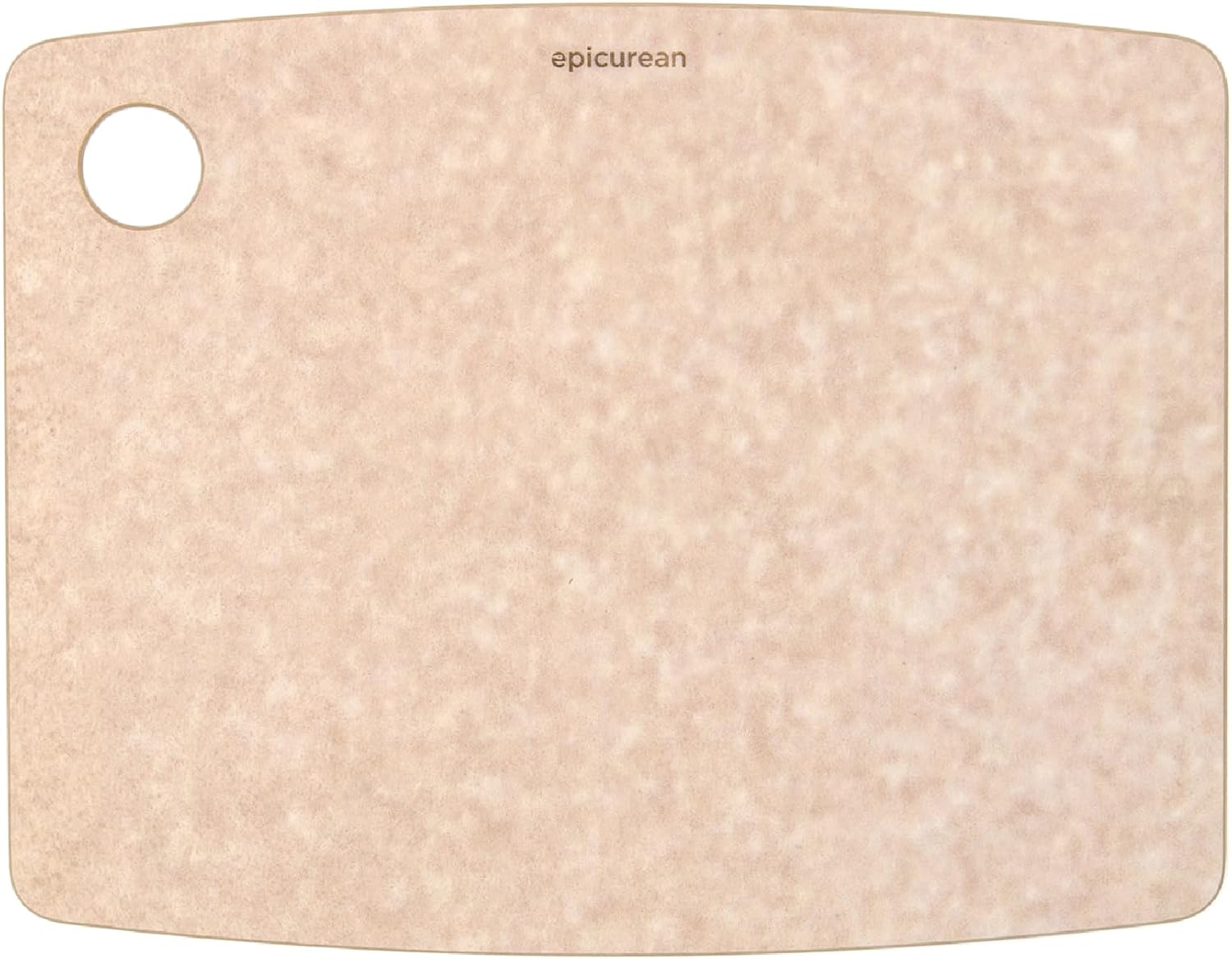
*Composite boards like Epicurean use wood fiber bonded with food-safe resin. They don’t release traditional microplastics, though long-term particle studies specific to these boards are limited.
Our Top Picks: Safer Cutting Board Alternatives
Ready to swap out your plastic board? Here are four alternatives we recommend, spanning different materials and price points.
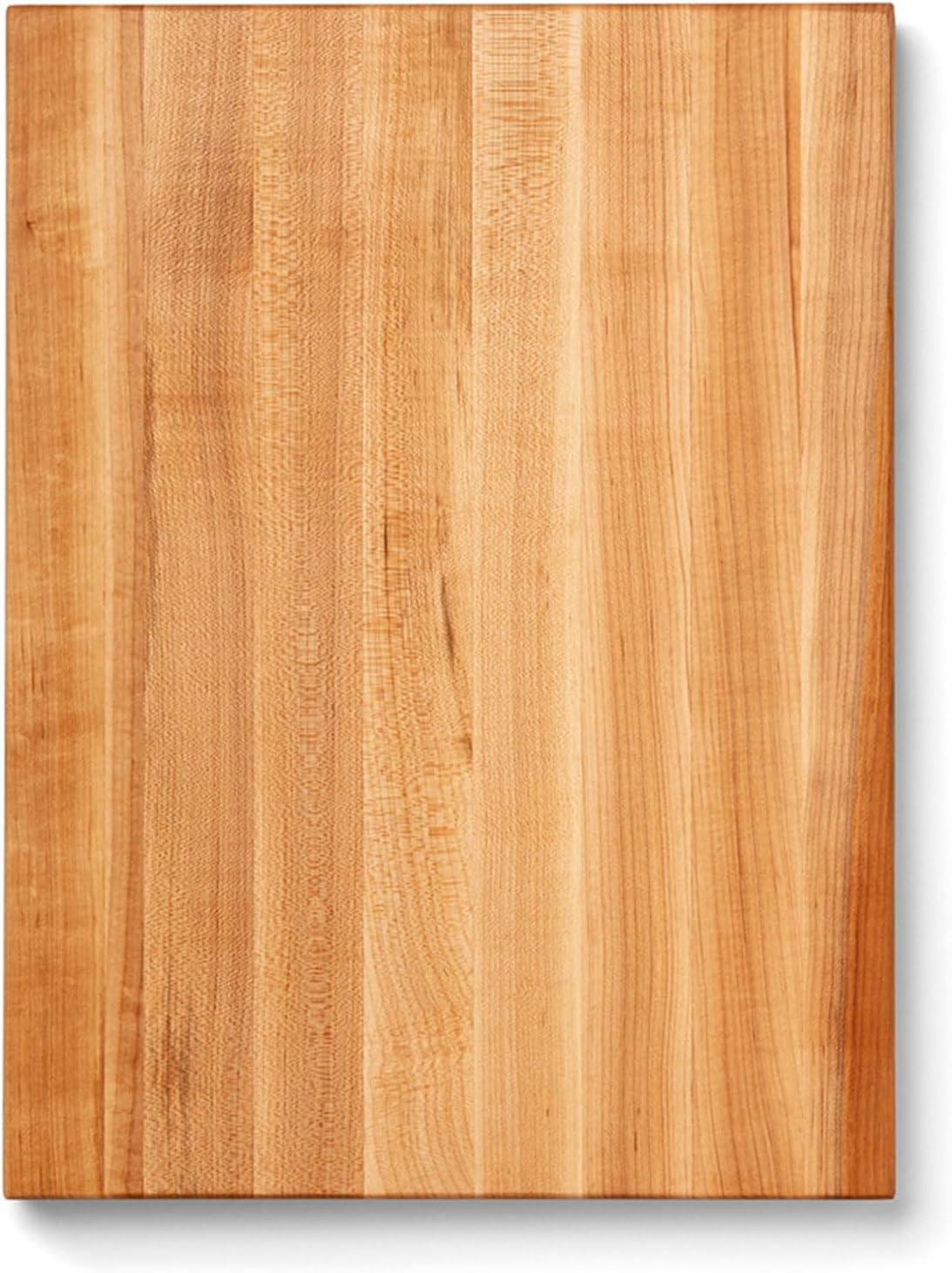
1. John Boos Maple R-Board – Best Overall Wood Board
John Boos has been making cutting boards in the U.S. since 1887, and the R-Board is their most popular model for good reason. It’s a 20″ x 15″ reversible maple board that’s 1.5 inches thick and built to last decades. Maple is a tight-grained hardwood with natural antibacterial properties, and the edge-grain construction resists deep knife scarring. This is the board you buy once and pass down.
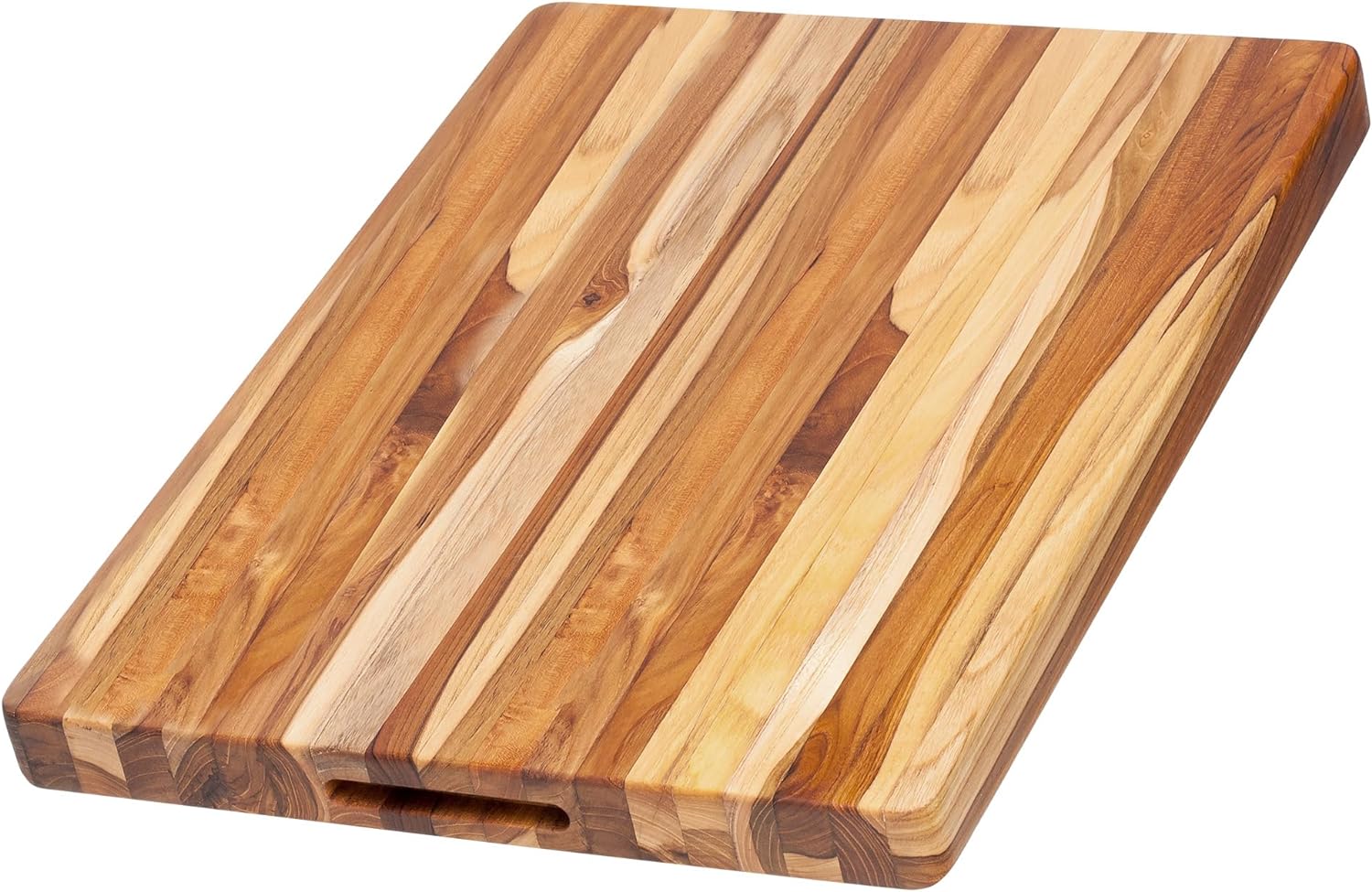
2. Teakhaus Edge Grain Teak Board – Best Teak Option
If you want a wood board with lower maintenance, teak is the way to go. Teak is naturally rich in oils, which means it resists moisture and warping better than maple without as much oiling. This FSC-certified Teakhaus board is 18″ x 14″, reversible, and comes with grip handles. America’s Test Kitchen named their line a top pick for wooden boards.
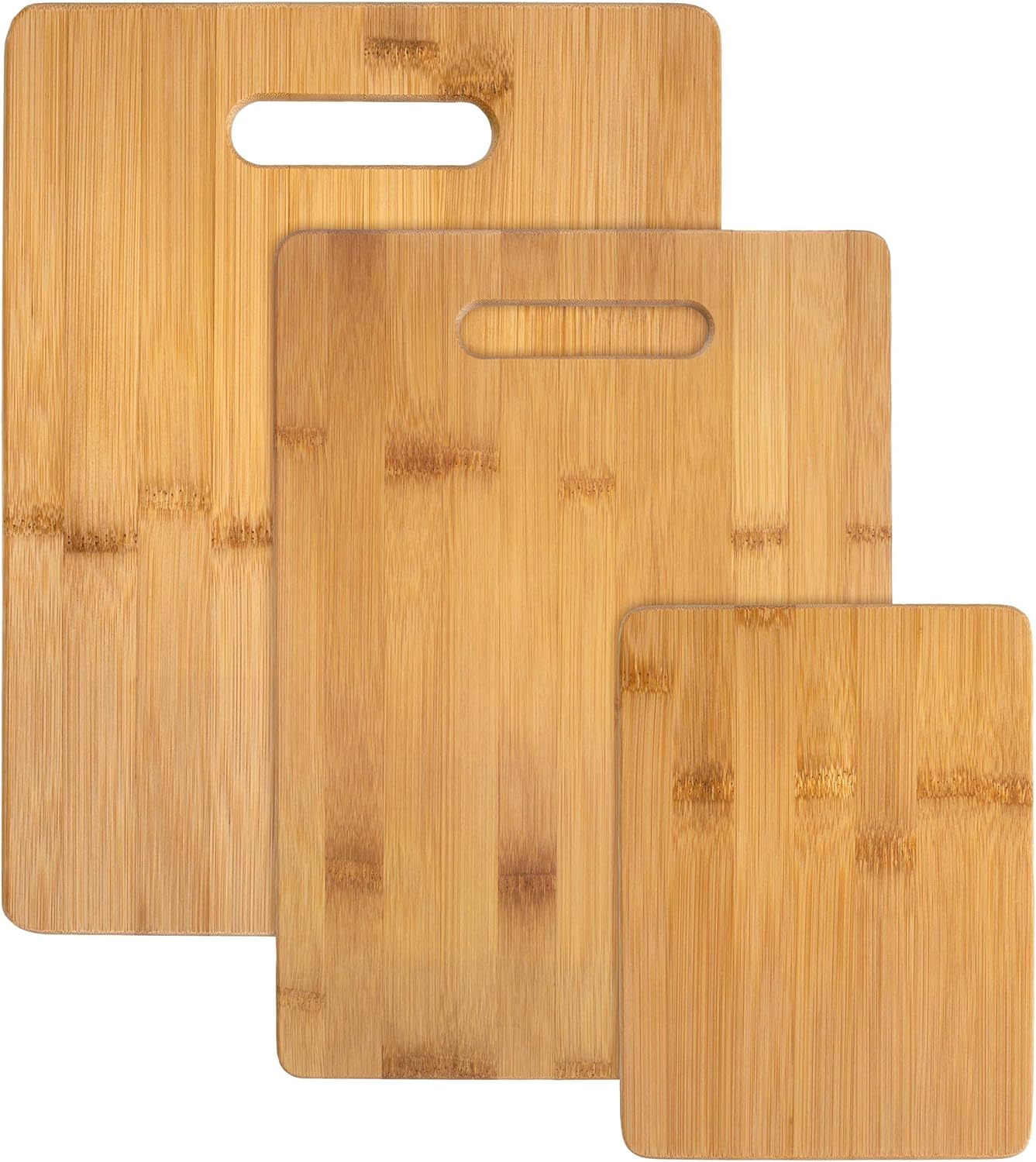
3. Totally Bamboo 3-Piece Set – Best Budget Bamboo
Bamboo is technically a grass, not a wood, but it functions similarly as a cutting surface and doesn’t shed microplastics. This three-piece set from Totally Bamboo gives you large, medium, and small boards for different tasks. Bamboo is lighter than hardwood and naturally antimicrobial. The trade-off: it’s harder on knife edges than maple or teak, and it does need occasional oiling.
4. Epicurean Kitchen Series – Best Composite/Dishwasher-Safe
If you love the convenience of plastic boards (lightweight, dishwasher safe), the Epicurean Kitchen Series is the closest plastic-free equivalent. Made from Richlite, a wood-fiber composite, these boards are non-porous, won’t dull your knives, and can go right in the dishwasher. They’re made in the USA and come with a limited lifetime warranty. The 14.5″ x 11.25″ size works for most everyday prep.
Practical Tips: When to Replace and How to Maintain Your Board
Whether you’re transitioning away from plastic or maintaining a wood or bamboo board, these guidelines will help you get the most out of your cutting surface while minimizing health risks.
If you still use a plastic board:
- Replace it when you see deep grooves. Those score marks are literally where the plastic used to be. Once a board has visible knife scarring, it’s releasing significantly more particles with each use.
- Use it only for raw meat (if at all). If you keep one plastic board around for raw poultry for sanitation reasons, make that its sole job and replace it every 6 to 12 months.
- Don’t use excessive force. The NDSU study found that chopping force directly correlated with particle release. If you’re using a plastic board, gentler cuts produce fewer microplastics.
For wood and bamboo boards:
- Oil monthly. Apply food-grade mineral oil or a beeswax-based board cream once a month (or whenever the wood looks dry). This keeps the grain sealed and prevents cracking.
- Hand wash only. Never put wood or bamboo in the dishwasher. The high heat and prolonged moisture will cause warping and splitting.
- Dry upright. After washing, stand the board on its edge to air dry. Laying it flat while wet encourages warping.
- Sand when needed. If your wood board develops rough spots or minor grooves, fine-grit sandpaper (220 grit) can smooth it out. Re-oil afterward.
- Replace when cracked. Small knife marks are fine on wood, but deep cracks that trap food particles mean it’s time for a new board.
For composite boards:
- Dishwasher friendly. Boards like Epicurean can go in the dishwasher, making maintenance simple.
- No oiling required. The non-porous surface doesn’t absorb moisture or odors.
- Replace if warped. Though durable, composite boards can occasionally warp with extreme heat. If it no longer sits flat, swap it out.
The Size Problem: Why Smaller Particles May Be More Dangerous
Not all microplastics are created equal, and size matters enormously. The NDSU study found that the majority of particles released from cutting boards were smaller than 100 micrometers (about the width of a human hair). Many were in the single-digit micrometer range, and the 2022 Journal of Hazardous Materials study confirmed that nanoplastics – particles under 1 micrometer – are also released during cutting.
Why does size matter? Larger microplastics mostly pass through your digestive system. But as particles get smaller, they become more biologically active. Research has shown that micro- and nanoplastics have been detected in human blood, lung tissue, liver, and even placental tissue. Particles under 10 micrometers can potentially cross the intestinal barrier and enter the bloodstream, while nanoplastics may be small enough to penetrate individual cells.
The chemical dimension adds another layer of concern. Plastic cutting boards aren’t pure polymer. They contain additives like stabilizers, colorants, and plasticizers. The Gan et al. study specifically characterized potential heavy metal contaminants and chemical additives in the released particles. When these chemically complex particles enter your body, they may carry those additives along with them.
The Bigger Picture: Cutting Boards in Context
It’s worth stepping back to see how cutting boards fit into your total microplastic exposure. Americans ingest an estimated 50,000 or more microplastic particles per year from all food sources, according to research cited in Environmental Health Perspectives. Your cutting board – potentially adding tens of millions more particles – could be one of the single largest controllable sources of microplastics in your kitchen.
That’s actually good news, in a way. Unlike microplastics in tap water or ocean fish (which you can’t easily avoid), cutting board microplastics are entirely within your control. Swapping one piece of kitchen equipment is a simple, high-impact change. You don’t need to overhaul your entire kitchen in one day. Just start with the board you use most.
And if you’re already thinking about reducing plastic in your kitchen, it pairs well with other swaps: ditching plastic food storage for glass or stainless steel, choosing plastic-free tea bags, and avoiding microwaving in plastic containers. Each individual change is small, but together they add up to a meaningfully lower exposure to microplastics in your daily life.
If you want the buy page, not the science: Best non-toxic cutting boards in 2026.
Related Articles
- Is Microwaving Plastic Safe? What Science Actually Says in 2026
- Microplastics in Tea Bags: Which Brands Are Safe?
- Is Silicone Safe? Silicone vs. Plastic
- Best Reusable Food Storage Containers in 2026: Glass vs. Stainless Steel vs. Silicone
Disclaimer: This article is for informational purposes only and does not constitute medical advice. Always consult a healthcare professional with questions about your health. The studies referenced are based on the best available research as of the publication date, and the science on microplastics and human health is still evolving. This post contains affiliate links to Amazon. If you purchase through these links, we may earn a small commission at no extra cost to you. This helps support No Plastic Living and allows us to continue producing free, research-backed content. We only recommend products we genuinely believe offer a safer alternative.