
Updated October 2026
If the spatula in your pan is black plastic, read this before you throw the whole drawer out. In 2024 a Chemosphere paper found flame retardants in some black plastic kitchen utensils, the kind used in electronics. The follow-up claim, that a normal day of cooking lands next to the EPA limit, was a math error. Replace the tool that sits in hot food with steel or wood, and use the corrected numbers.
The 2024 paper
In September 2024, Megan Liu, Sicco Brandsma, and Erika Schreder published From e-waste to living space in Chemosphere. Liu and Schreder are at Toxic-Free Future. Brandsma is at Vrije Universiteit Amsterdam. They bought 203 black plastic household products in the US and screened them for bromine. Twenty products came back above 50 parts per million of bromine. Nine of those were kitchen utensils. Food Packaging Forum summarized that screen.
The twenty high-bromine products were tested for flame retardants. Flame retardants showed up in 85 percent of those twenty, at totals up to 22,800 mg/kg. The screen was 203 products. Most of them were not in that high-bromine group. DecaBDE, also called BDE-209, was one of the compounds. It was used in electronics housings. The EPA has restricted it. A spatula does not need a flame retardant. The paper’s account is that black dye hides mixed recycled plastic, so plastic from electronics can land in a kitchen tool.
The two corrections
The paper first estimated that a contaminated utensil could transfer 34,700 nanograms of BDE-209 in a day, and said that intake would approach the EPA reference dose. The reference dose they printed for a 60 kg adult was 42,000 nanograms a day. The dose is 420,000. They had dropped a zero. Chemosphere corrected that in December 2024. The revised sentence says the calculated daily intake remains an order of magnitude lower than the U.S. BDE-209 reference dose.
A second correction in 2025 says the exposure formula was misread. The corrected estimate is 7,900 nanograms a day, down from 34,700. The authors describe it as one example in the discussion. Read the 2025 corrigendum. Retraction Watch quotes the 7,900 figure and the authors’ note.
Both corrections change the dose story. The measurements stay. Some of the black plastic utensils in the study contained flame retardants that belong in electronics. The amount a cook might take in from one of those utensils, on the paper’s corrected example, sits well under the reference dose they were comparing it with.
What to cook with
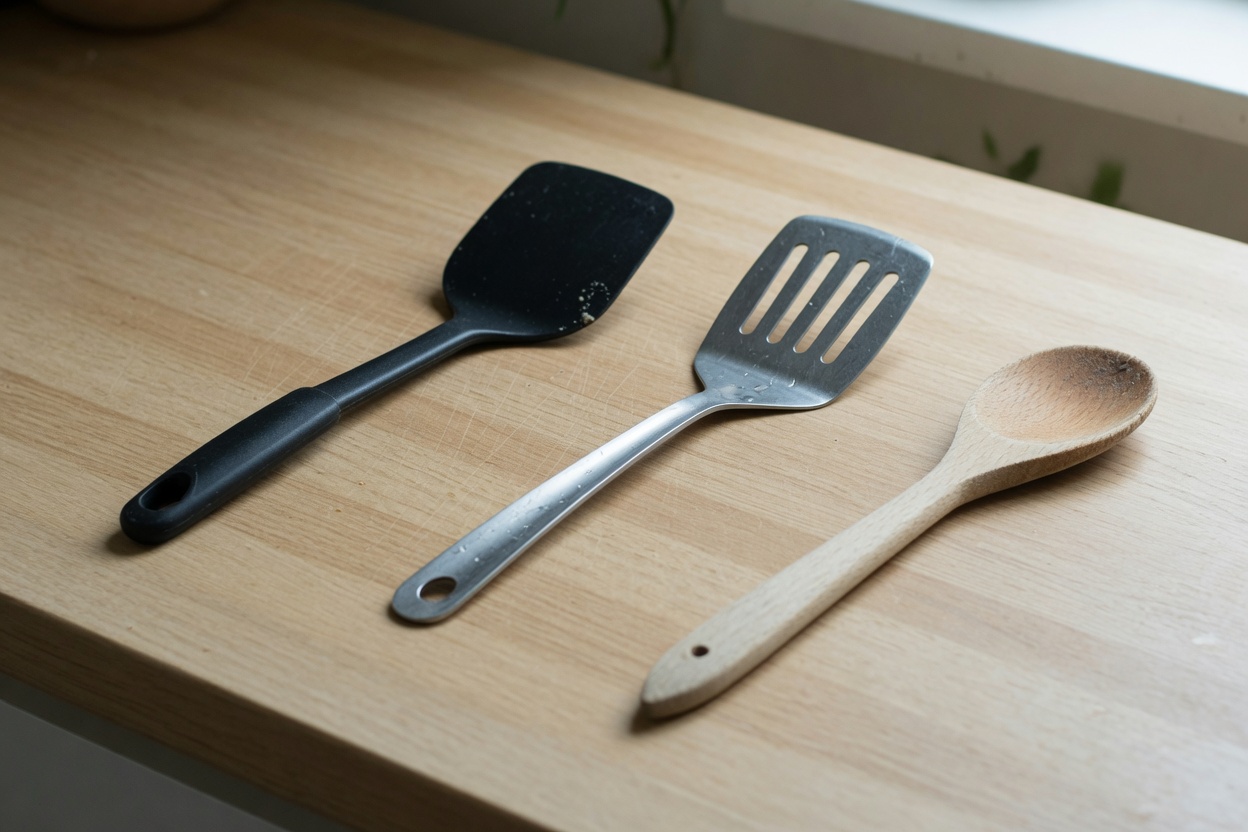
Replace the black plastic tool you leave in the hot pan. Use a one-piece stainless steel turner, or a wood spoon or wood spatula.
Read the listing. A turner sold as stainless can still put nylon on the head or a soft plastic grip on the handle. Nylon is plastic. The head is the part in the food. A plastic grip is still plastic, same as a plastic handle on a steel kettle.
This study tested black plastic. A silicone head is a different material, and a different buy from steel or wood. The page for that material is silicone versus plastic. The pans are a separate page: non-toxic cookware. Recycling codes, and the additives that ride along inside recycled plastic, are in the plastic recycling numbers guide. The rest of the kitchen is in how to go plastic-free in your kitchen.
The bottom line
Replace the black plastic spatula you use on heat with a one-piece steel turner or a wood utensil. The corrected exposure estimate is 7,900 nanograms a day, well under the EPA reference dose.