Last updated: February 2026 · Written by the No Plastic Living team
Every time you run the washing machine, your clothes are shedding plastic into the water supply. Not visible chunks – microscopic plastic fibers that slip through wastewater treatment plants, flow into rivers and oceans, and end up in drinking water. A single load of synthetic laundry can release over 700,000 microplastic fibers. That is not a typo.
If you wear polyester, nylon, acrylic, or spandex (and you almost certainly do – they make up over 60% of clothing worldwide), your washing machine is a microplastic factory. But here is the good news: you can dramatically reduce your contribution with a few simple changes and the right products.
This guide covers exactly what is happening in your washer, which fabrics are the worst offenders, and the best products to stop microplastic fibers from reaching your water.
One important caveat: These products reduce the microplastics YOU send into the water supply – but they can’t protect you from fibers released by everyone else’s laundry. For that, a quality water filter is your best line of defense. Check out our guide to the best water filters for microplastics.
The Problem: Your Washing Machine Is Polluting the Water
Synthetic fabrics are made from plastic. Polyester is essentially spun PET plastic – the same material as water bottles. Nylon, acrylic, and spandex are all petroleum-based plastics woven into fabric form. Every time these materials tumble around in a washing machine, they shed tiny plastic fibers.
Here is how bad it gets:
- 700,000+ fibers per load: A 2016 study by Plymouth University found that a single wash cycle can release up to 728,789 microfibers, depending on the fabric type and wash conditions.
- They survive treatment: Wastewater treatment plants catch some microfibers, but studies show 40% or more pass through into rivers, lakes, and oceans. A 2019 study in Nature Sustainability found microfibers in 83% of tap water samples worldwide.
- They are in you: Microplastics have been found in human blood, lungs, placentas, and breast milk. A 2022 study in Environment International detected microplastics in the blood of 77% of participants tested.
- They do not break down: These fibers persist in the environment for hundreds of years, accumulating in soil, water, and the food chain.
The average household does about 300 loads of laundry per year. That is potentially 200 million microfibers washing down your drain annually – from your home alone.
Which Fabrics Shed the Most Microplastics?
Not all fabrics are created equal when it comes to microplastic shedding. Here is a breakdown from worst to best:
Worst Offenders (Synthetic/Plastic-Based)
- Acrylic: The worst shedder by far. Research shows acrylic releases up to 5 times more microfibers than polyester per wash. Think sweaters, blankets, and knit hats.
- Polyester: The most common synthetic fabric in the world. Found in everything from athletic wear to bedsheets to fast fashion basics. Sheds heavily, especially when new.
- Nylon: Common in activewear, swimsuits, and stockings. Sheds slightly less than polyester but still a significant source.
- Spandex/Elastane: Usually blended with other fabrics for stretch. Any clothing labeled “stretch fit” likely contains spandex. The blended construction can actually increase shedding.
- Polyester-cotton blends: Often marketed as a “best of both worlds” fabric. The polyester component still sheds plastic fibers, and the blended construction can make shedding worse than pure polyester in some cases.
Better Choices (Natural Fibers)
- Organic cotton: Sheds fibers, but they are natural cellulose that biodegrades. No plastic.
- Linen: Made from flax. Extremely durable, sheds very little, fully biodegradable.
- Hemp: One of the most durable natural fibers. Minimal shedding, biodegradable, and requires less water to grow than cotton.
- Wool: Natural protein fiber that biodegrades. Some shedding occurs, but the fibers are not plastic.
- Silk: Minimal shedding, fully biodegradable.
The takeaway: the more synthetic clothing you own, the more plastic you are washing into the water. But since most of us cannot replace our entire wardrobe overnight, the next best thing is to catch those fibers before they leave your machine.
Best Products to Catch Microfibers in Your Laundry
These products are designed specifically to capture microplastic fibers during the wash cycle. They range from simple toss-in solutions to external filters that catch everything leaving your machine.
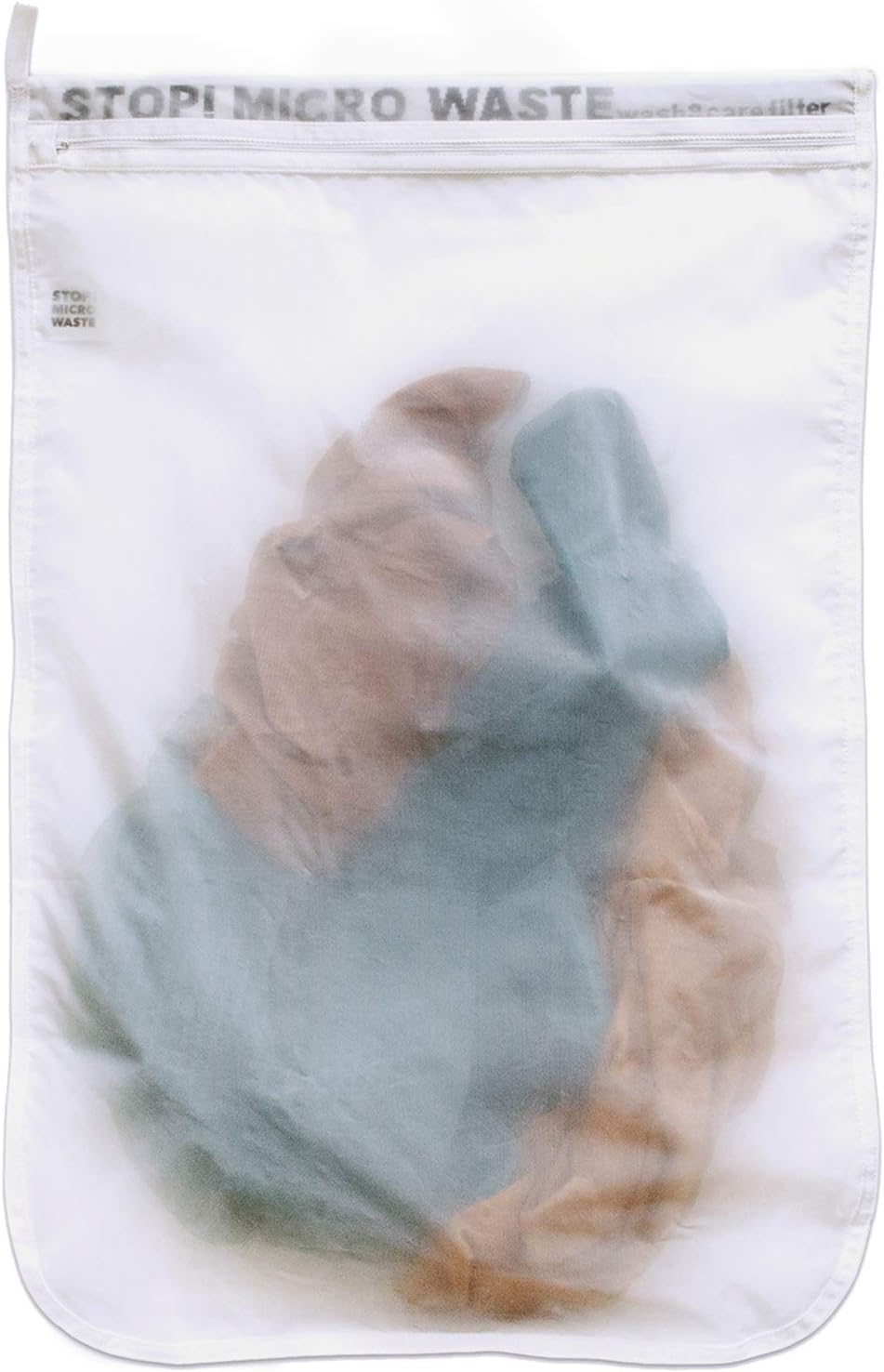
1. Guppyfriend Washing Bag – Best Overall Solution
Price: ~$35
Type: Mesh washing bag
Rating: 4.3/5 stars on Amazon
The Guppyfriend is the most researched and widely recommended microfiber-catching product on the market. Developed by the German nonprofit STOP! Micro Waste, it is a specially designed mesh bag made from untreated, recyclable polyamide. You place your synthetic clothing inside the bag, zip it closed, and wash as normal.
The bag does two things: it reduces fiber breakage during washing (the mesh reduces mechanical stress on fabrics), and it catches the fibers that do break off. After washing, you remove the collected fibers from the inside corners of the bag and dispose of them in the trash.
Key features:
- Scientifically tested – proven to reduce microfiber release by up to 86% (Fraunhofer Institute study)
- Self-cleaning mesh – fibers collect in corners for easy removal
- Protects clothing – reduces wear and pilling
- No microplastics from the bag itself – made from untreated monofilament
- Lasts for years with proper care
Pros: Most effective single product for microfiber capture, scientifically validated, doubles as garment protector, no installation needed
Cons: Only fits a portion of your laundry per bag (you may need 2-3 for a full load), requires you to sort synthetics into the bag, adds a step to your routine
2. Cora Ball – Easiest to Use
Price: ~$35
Type: Laundry ball (toss-in)
Rating: Highly rated on coraball.com
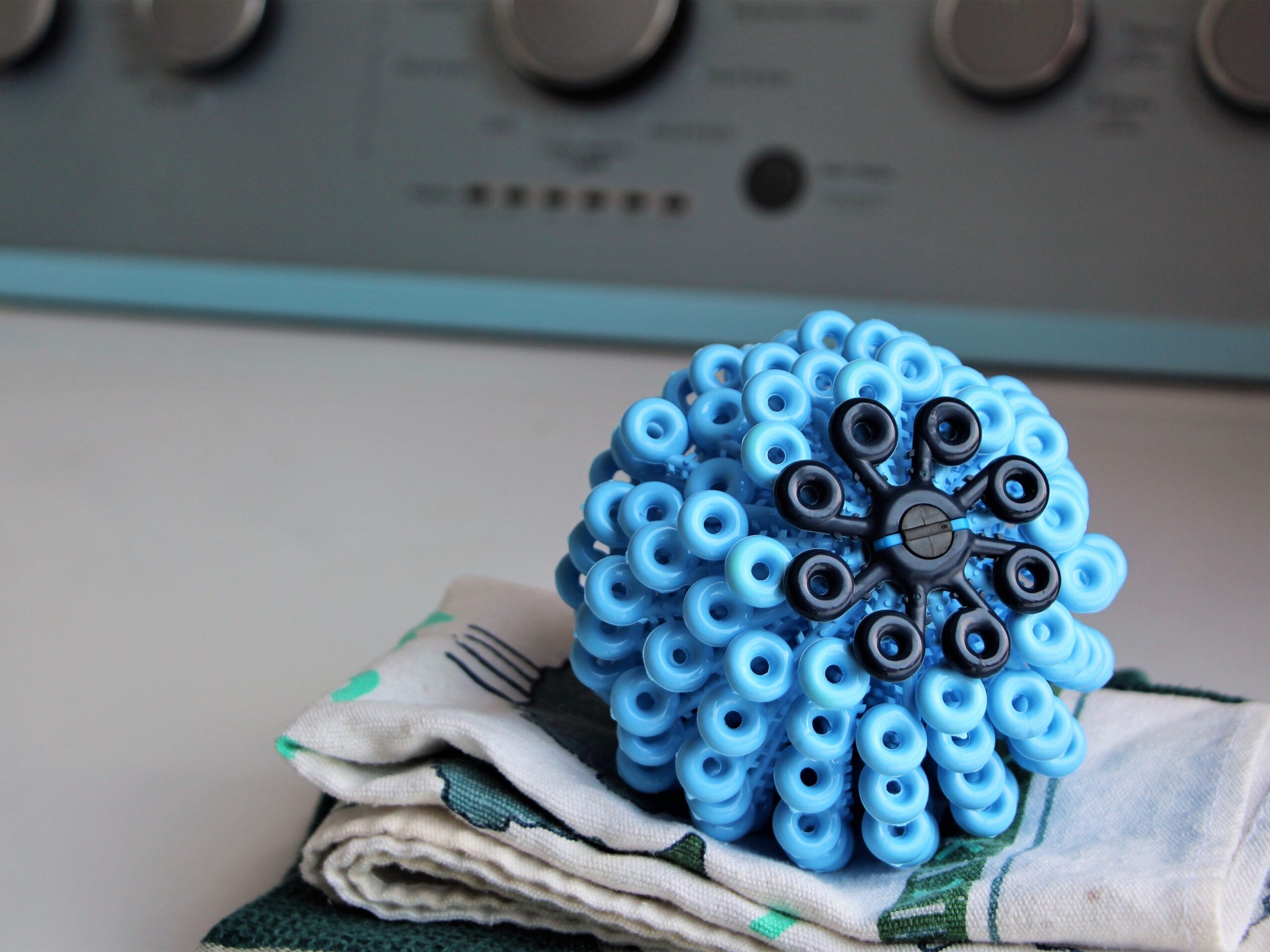
The Cora Ball was invented by National Geographic Explorer Rachael Z. Miller and inspired by the way coral filters the ocean. It is a round ball with soft, coral-like stalks that catch and tangle microfibers as it tumbles around in the wash with your clothes.
The biggest advantage of the Cora Ball is simplicity. You toss it in with your laundry and forget about it. No sorting, no bags, no installation. It works in any washing machine – top loader, front loader, with or without a center agitator.
Key features:
- Just toss it in – works in any washing machine
- Reduces fiber shedding AND catches released fibers
- Made from 100% recycled and recyclable plastic
- Lasts 8+ years with normal use
- Created by the Rozalia Project nonprofit
Pros: Zero effort, works with entire load (no sorting needed), very durable, supports ocean conservation nonprofit
Cons: Catches fewer fibers than the Guppyfriend bag (estimated 26-31% vs 86%), can snag delicate items like bra straps or thin fabrics, may be noisy in front-load washers
Note: The Cora Ball is primarily sold through coraball.com. Check their site for current pricing and availability.
3. Filtrol 160 – Best Whole-Machine Filter
Price: ~$140
Type: External washing machine filter
Rating: 4.0/5 stars on Amazon
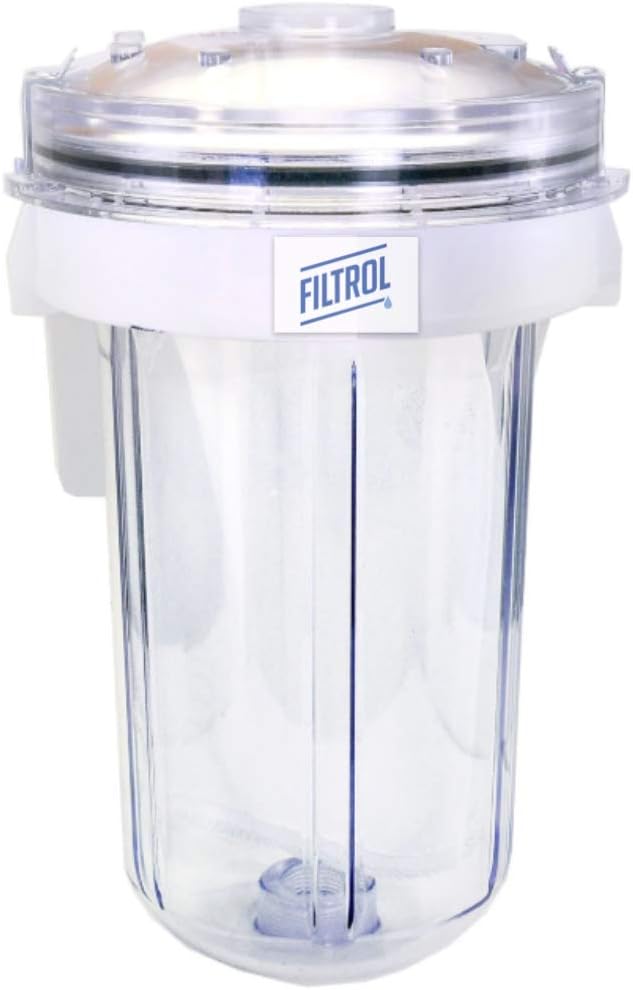
The Filtrol 160 is an external filter that attaches to your washing machine’s drain hose. Unlike the Guppyfriend or Cora Ball, it catches fibers from every single load – you do not need to sort clothes or remember to toss anything in. Every drop of water leaving your washer passes through the Filtrol’s filter bag.
This is the most thorough solution because it filters 100% of your wash water. The clear housing lets you see when the filter bag needs changing (roughly every 2-4 weeks depending on usage). Replacement filter bags cost about $20 for a 4-pack.
Key features:
- Filters ALL wash water – catches microfibers from every load automatically
- 160-micron filter bags trap fibers that wastewater plants miss
- Clear housing for easy visual monitoring
- Works with any washing machine (top or front loader)
- Also protects septic systems from lint and fiber buildup
Pros: Most comprehensive solution, no behavior change needed after installation, catches fibers from all fabrics automatically, protects plumbing and septic systems
Cons: Requires installation (attaching to drain hose), higher upfront cost, ongoing cost for replacement filter bags, takes up space near your washer
⚠️ Plastic disclaimer: The Filtrol housing is made from plastic (clear polycarbonate). While this is ironic for a microplastic-catching device, the filter itself prevents far more plastic from entering waterways than the housing contributes. The trade-off is overwhelmingly positive.
Which Product Should You Choose?
| Feature | Guppyfriend Bag | Cora Ball | Filtrol 160 |
|---|---|---|---|
| Price | ~$35 | ~$35 | ~$140 |
| Fiber capture rate | Up to 86% | ~26-31% | ~90%+ |
| Ease of use | Requires sorting synthetics | Just toss it in | Automatic after install |
| Installation | None | None | Requires plumbing |
| Ongoing cost | None | None | ~$20/4 filter bags |
| Best for | Maximum capture on a budget | Simplicity and convenience | Set-and-forget whole-machine filtering |
Our recommendation: start with the Guppyfriend bag for the best balance of effectiveness and affordability. If you want a zero-effort option, the Cora Ball is worth trying. If you are serious about eliminating microfiber pollution from your home, the Filtrol 160 is the most comprehensive solution.
10 Practical Tips to Reduce Microfiber Pollution From Your Laundry
Products help, but your laundry habits matter just as much. These changes cost nothing and can significantly reduce the microfibers leaving your machine:
- Wash less often. Not every garment needs washing after one wear. Jeans, sweaters, and outerwear can usually go several wears between washes. Fewer washes = fewer fibers released.
- Use cold water. Hot water increases fiber breakage. Washing at 30C/86F instead of 40C/104F can reduce microfiber shedding by up to 30%, according to a study in Environmental Science & Technology.
- Use the gentle/delicate cycle. Less agitation means less fiber breakage. A 2019 Newcastle University study found that delicate cycles released fewer fibers than standard cycles.
- Fill the machine. Full loads create less friction between garments than half loads. More clothes = more cushioning = less fiber shedding.
- Use liquid detergent. Powder detergents are more abrasive on fabrics. The granules create additional friction that increases fiber release. Liquid detergent is gentler.
- Skip the dryer when possible. Tumble drying continues to break fibers. Line drying or air drying eliminates this extra shedding. If you must use a dryer, clean the lint trap every time – that lint is largely microfibers.
- Choose a front-loading washer. Front-loaders use less water and create less mechanical stress on fabrics than top-loaders. Studies show they release up to 7 times fewer microfibers per wash.
- Avoid fabric softener. Fabric softeners coat fibers with chemicals that can make them more prone to shedding over time. Use white vinegar as a natural alternative.
- Buy higher-quality clothing. Cheap fast fashion fabrics shed more because they are loosely woven. Higher-quality garments with tighter weaves shed fewer fibers.
- Choose natural fibers when possible. When shopping for new clothes, check the label. Choose cotton, linen, hemp, or wool over polyester and acrylic when you can. Brands like Patagonia, Reformation, and Everlane offer natural-fiber options and are transparent about their materials.
Frequently Asked Questions
How many microplastics does a single load of laundry release?
Research estimates between 700,000 and 12 million microfibers per load, depending on the fabric type, water temperature, wash cycle, and machine type. Acrylic fabrics shed the most, while polyester and nylon shed less but still release hundreds of thousands of fibers.
Do microfiber catchers actually work?
Yes, but effectiveness varies. The Guppyfriend bag has been independently tested and shown to capture up to 86% of microfibers (Fraunhofer Institute). External filters like the Filtrol capture 90% or more. The Cora Ball captures around 26-31% of fibers. Any reduction is better than none.
Are cotton and natural fibers completely safe?
Natural fibers like cotton, linen, and wool still shed fibers during washing. However, these fibers are biodegradable and break down in the environment. They are not plastic and do not pose the same long-term pollution and health risks as synthetic microfibers.
Does my water treatment plant filter out microfibers?
Partially. Advanced wastewater treatment plants can capture 95-99% of microfibers, but even that remaining 1-5% represents millions of fibers per day entering waterways. Many treatment plants are less advanced and let significantly more through. The microfibers captured in treatment sludge often end up spread on agricultural land as fertilizer, re-entering the environment.
Is a front-load or top-load washer better for reducing microfibers?
Front-load washers are significantly better. They use less water, and the tumbling action is gentler than the agitator in a top-loader. Studies show front-loaders can release up to 7 times fewer microfibers than top-loaders.
What should I do with the fibers I collect?
Unfortunately, there is no perfect disposal method. The best current option is to put collected fibers in the trash (they will go to a landfill, which is better than waterways). Do not flush them or put them in compost. Some researchers are working on recycling solutions, but none are widely available yet.
Do dryer sheets or fabric softeners help with microfibers?
No. In fact, they may make the problem worse. Fabric softeners coat fibers with chemicals that can weaken them over time, potentially increasing shedding in future washes. Dryer sheets do not capture microfibers.
The Bottom Line
Every load of laundry you run with synthetic fabrics sends hundreds of thousands of plastic fibers into the water supply. These microplastics are ending up in oceans, drinking water, and human bodies. The science is clear, and the scale of the problem is massive.
But you are not powerless. A combination of better laundry habits and the right products can reduce your microfiber output by 80-90%. Start with the simplest changes – wash in cold water, use the gentle cycle, wash less frequently. Then add a microfiber-catching product like the Guppyfriend bag or Filtrol filter to catch what your habits miss.
Your washing machine does not have to be a microplastic factory. Small changes, big impact.
This article contains affiliate links. When you purchase through our links, we may earn a small commission at no extra cost to you. This supports our mission to help people reduce plastic exposure. We only recommend products we have researched and believe in.