
Here’s something most air fryer brands don’t advertise: the nonstick coating on your basket is probably made with PFAS – the same “forever chemicals” linked to cancer, thyroid disease, and immune problems. And you’re heating it to 400°F while it touches your food.
Not great.
The air fryer market has exploded, but finding a genuinely non-toxic air fryer still takes work. Most models use PTFE (Teflon) or mystery “nonstick” coatings that contain PFAS. A few brands have figured out how to make air fryers with glass, stainless steel, or truly PFAS-free ceramic – and those are the only ones worth buying.
Last updated: September 2026
I compared specs, certifications, and reviews. Food should sit on glass or stainless, not a coating. PFAS-free ceramic is a stopgap if that is what gets the Teflon basket out of the kitchen this month. It is not a best on this site.
What Makes an Air Fryer Toxic?
Most air fryers have a nonstick basket coated with one or more of these problem materials:
- PTFE (Teflon) – The classic nonstick coating. It starts breaking down around 400°F and releases toxic fumes at 500°F+. Most air fryers hit these temperatures easily.
- PFAS (“forever chemicals”) – A family of thousands of synthetic chemicals used in nonstick coatings. They don’t break down in your body or the environment. Linked to cancer, hormone disruption, liver damage, and weakened immunity.
- BPA and phthalates – Found in plastic components that can leach into food, especially at high heat.
- VOCs (volatile organic compounds) – Released when nonstick coatings overheat. You can’t see or smell most of them, but they’re entering your food and your air.
The core problem is simple: air fryers cook at high temperatures, and high temperatures accelerate chemical leaching from coatings. A nonstick pan on your stovetop is one thing – an enclosed appliance blasting 400°F convection air directly onto a coated surface is another level of exposure.
What to Look For in a Non-Toxic Air Fryer
When shopping for a PFAS-free air fryer, the cooking surface material is everything. Here’s what’s actually safe:
- Glass – The gold standard. Borosilicate glass is completely inert, doesn’t leach anything, and can handle air fryer temperatures without breaking a sweat. The downside: it’s heavier and can break if dropped.
- Stainless steel – Another excellent option. No coatings to worry about, extremely durable, and easy to clean. Food may stick more, but that’s a small tradeoff for zero chemical exposure.
- PFAS-free ceramic – Ceramic nonstick coatings can be made without PFAS, and several brands now do this. Look for explicit “PFAS-free” or “PFOA/PFAS-free” claims – not just “ceramic coated,” which can still contain PFAS in the manufacturing process.
What to avoid: Any air fryer that says “nonstick” without specifying the coating material. If they don’t tell you what it’s made of, assume it’s PTFE or PFAS-containing.
The 6 Best Non-Toxic Air Fryers in 2026
Ceramic stopgap: Typhur Sync – PFAS-Free Ceramic Air Fryer
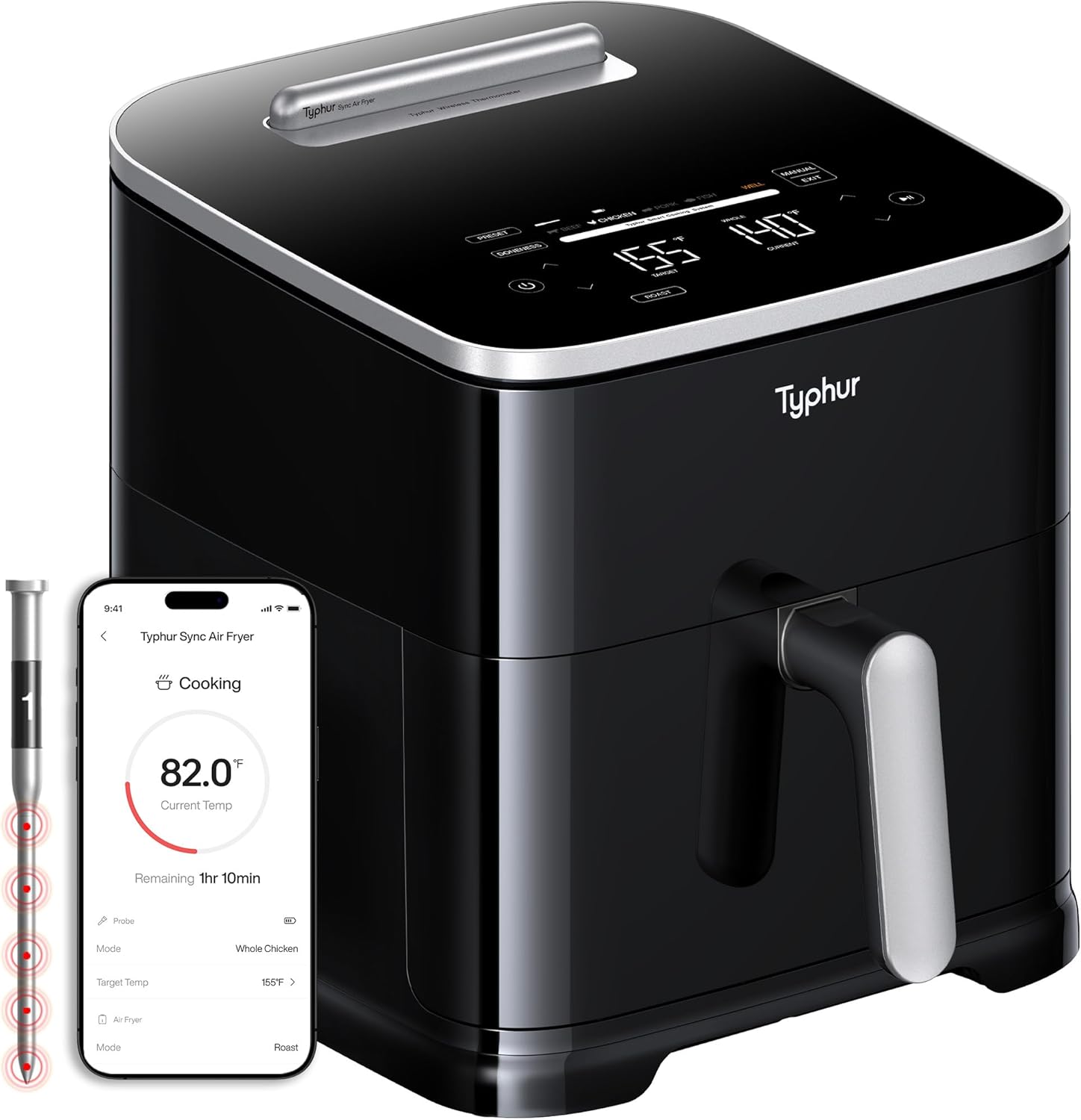
Price: ~$200 | Capacity: 8 QT | Rating: 4.7 stars (261 reviews)
The Typhur Sync is the ceramic nonstick people buy when they want an air-fryer that behaves like a coated basket. PFAS-free, PFOA-free, PTFE-free, 8 quarts, wireless thermometer. The food still sits on a coating. Coatings wear. That is why it is a stopgap, not a best.
Why it’s safe: Typhur explicitly certifies their coating as PFAS-free, PFOA-free, and PTFE-free. The ceramic coating is their own proprietary formula designed specifically for high-heat cooking.
Key features:
- 8QT dual-zone capacity
- Built-in wireless meat thermometer for perfect proteins
- PFAS-free ceramic nonstick coating
- Sleek touchscreen controls
Pros:
- Excellent cooking performance with even heat distribution
- The meat thermometer is a game-changer for chicken and roasts
- Large capacity without a massive footprint
- High customer satisfaction (4.7 stars is outstanding for air fryers)
Cons:
- ~$200 is a premium price for an air fryer
- Ceramic coatings wear over time (plan to replace baskets eventually)
- Newer brand with less long-term track record
Best Glass Air Fryer: Fritaire Pro Glass Air Fryer
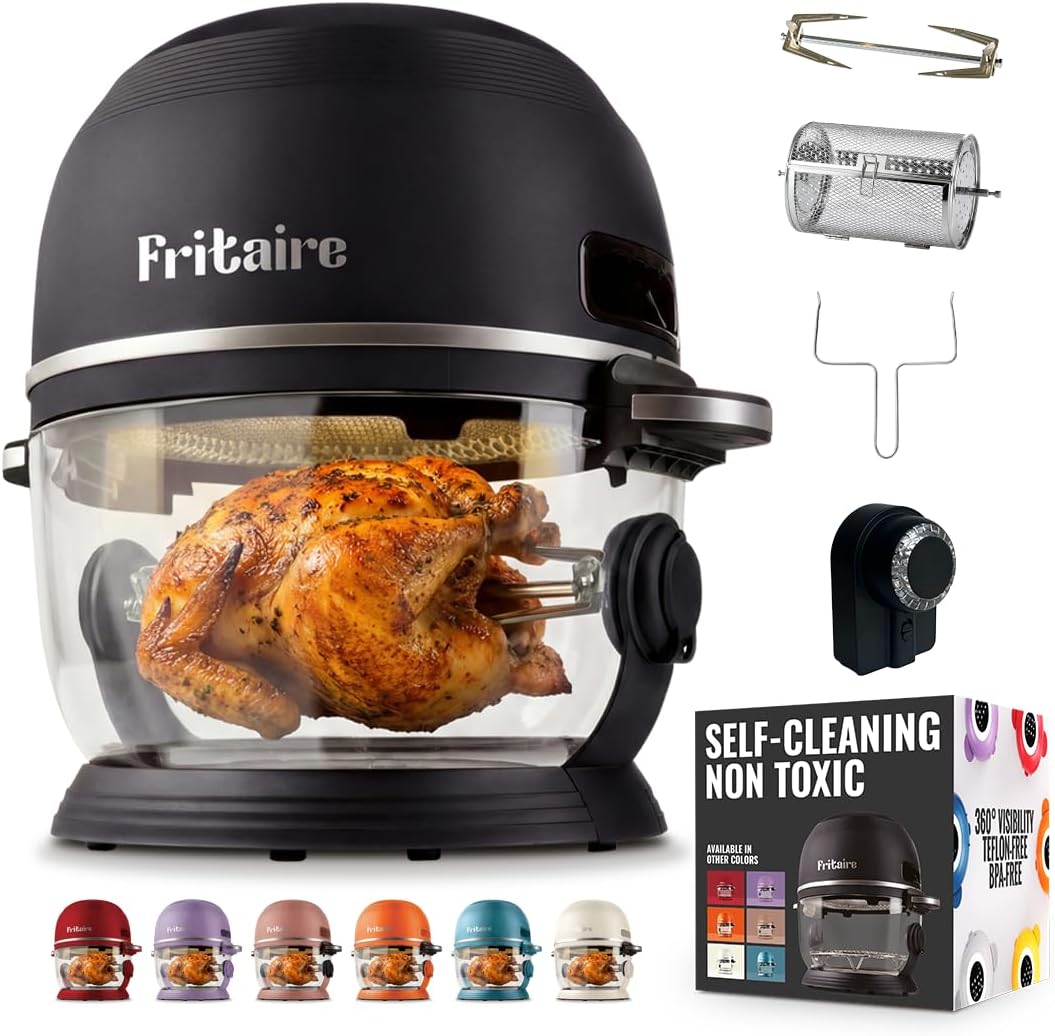
Price: $199.99 | Capacity: 5 QT | Rating: 4.0 stars (551 reviews)
If you want zero coatings of any kind touching your food, the Fritaire Pro is your pick. It uses a borosilicate glass bowl as the cooking chamber – no ceramic, no nonstick, no nothing. Just glass and hot air.
Why it’s safe: Glass is completely inert. There’s literally no coating to worry about. The food sits in a glass bowl, and that’s it.
Key features:
- Borosilicate glass cooking bowl
- Self-cleaning cycle
- 5QT capacity
- Built-in rotisserie function
Pros:
- Truly zero chemical exposure – glass is the safest cooking surface
- Self-cleaning mode saves hassle
- You can see your food cooking through the glass
- Rotisserie is a nice bonus feature
Cons:
- Some users report durability issues – the rotisserie spit can break, and a few units stopped heating after 4-5 months
- 4.0-star rating is lower than competitors (read the reviews carefully)
- Glass bowl is heavy and breakable
- 5QT is on the smaller side for families
Honest take: The concept is perfect – glass is the safest material, period. But the execution has some quality control issues based on customer reviews. If you get a good unit, you’ll love it. Just keep your receipt.
Best Overall: Ninja Crispi (glass)
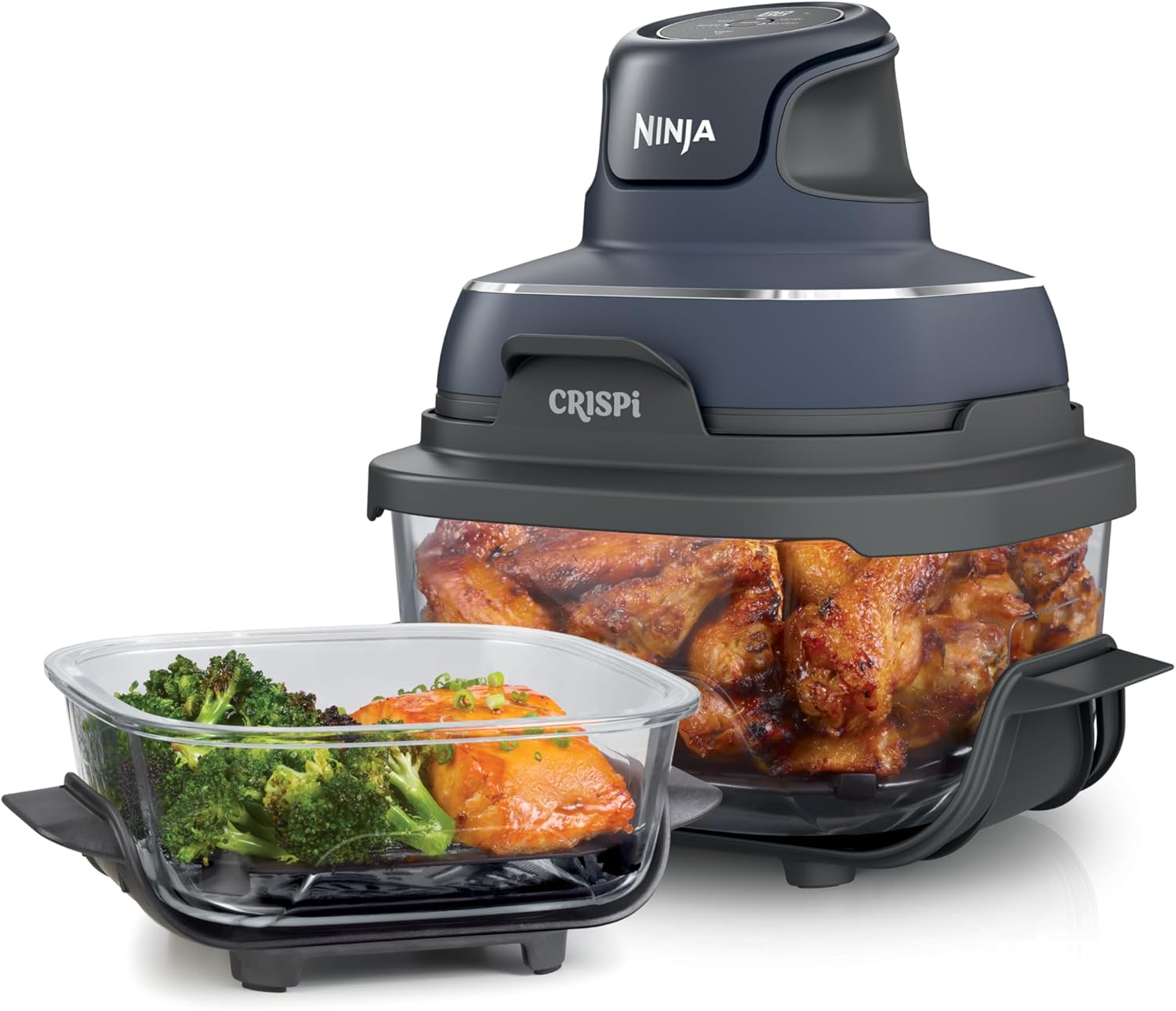
Price: ~$160 | Capacity: 4 QT | Rating: 4.7 stars (5,669+ reviews)
This is the one this page is for. Food sits in glass, not a coating. The containers go microwave, freezer, dishwasher. Cook, store, reheat. Ninja is a real company with replacement parts. That is the default buy if you want an air fryer that matches the rest of this site.
Why it’s safe: Glass cooking containers with no nonstick coating. The food only touches glass.
Key features:
- Glass cooking containers (included)
- Containers are microwave, freezer, and dishwasher safe
- 4QT capacity
- Ninja brand reliability and customer support
Pros:
- Massive review count (5,600+) with a strong 4.7 rating – this is battle-tested
- Glass containers double as storage and reheating vessels
- Ninja’s customer service and warranty are solid
- Compact footprint for smaller kitchens
Cons:
- 4QT is small – best for 1-2 people
- Glass containers can break if dropped
- Fewer features than some premium options
Best for Families: Nuwave Bravo XL Pro
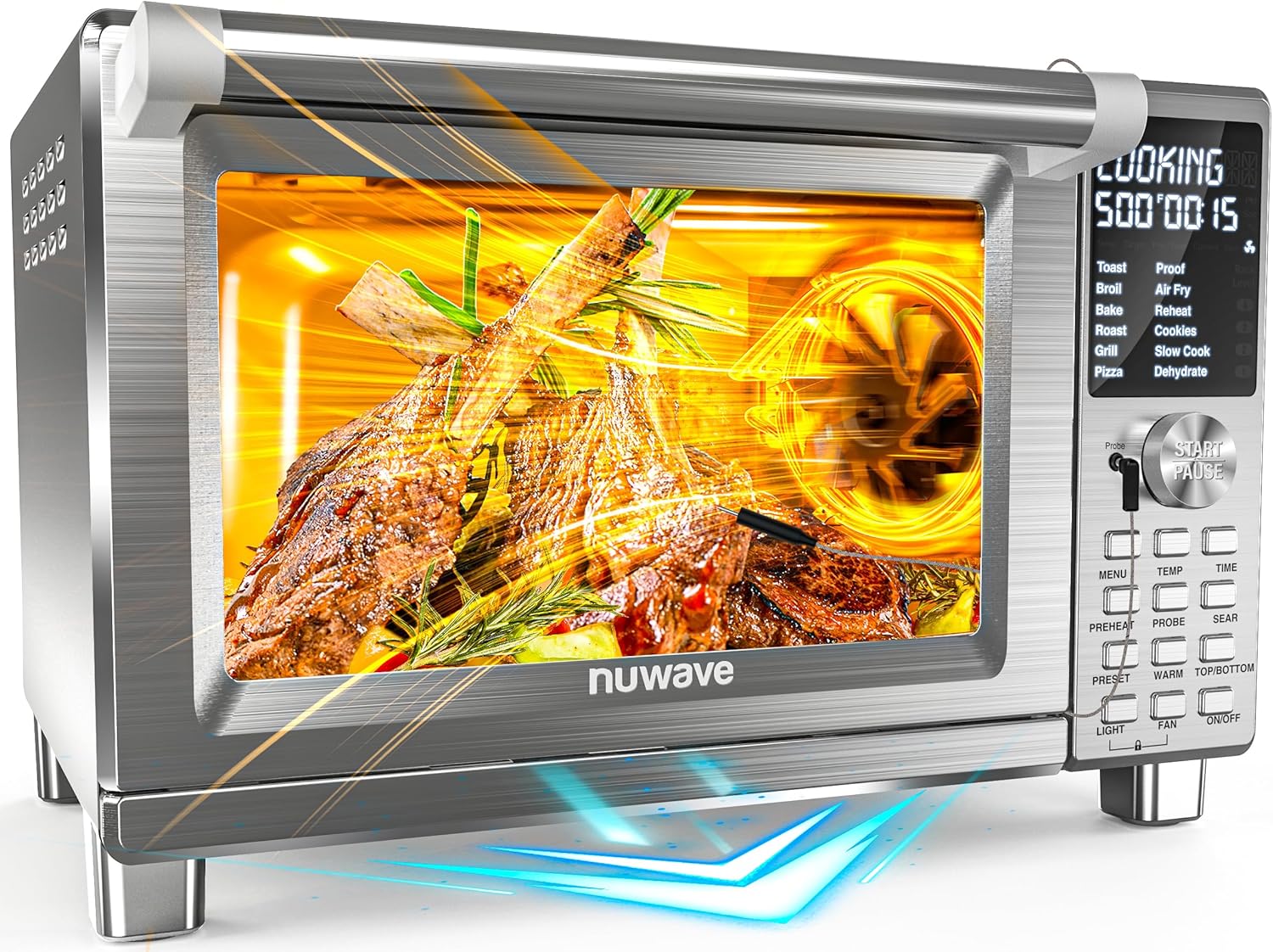
Price: ~$300 | Capacity: 30 QT | Rating: 4.4 stars (2,001+ reviews)
Need to feed a family? The Nuwave Bravo XL Pro is a 30-quart toaster oven-style air fryer with a stainless steel interior. No nonstick coating in the cooking chamber at all – just stainless steel racks and trays.
Why it’s safe: Stainless steel cooking chamber and accessories. PFAS-free by design since there’s no nonstick coating to worry about.
Key features:
- 30QT capacity – fits a whole chicken or a 13″ pizza
- Stainless steel interior
- Toaster oven + air fryer combo
- Multiple rack positions for batch cooking
- PFAS-free certification
Pros:
- Massive capacity – can replace your toaster oven entirely
- Stainless steel doesn’t wear out like ceramic coatings
- Versatile – air fry, bake, broil, toast, dehydrate
- Over 2,000 reviews with a 4.4 rating
Cons:
- Big – takes up serious counter space
- Food sticks more to stainless steel (use parchment paper)
- Longer preheat time due to size
Budget ceramic stopgap: GreenLife 5.3QT
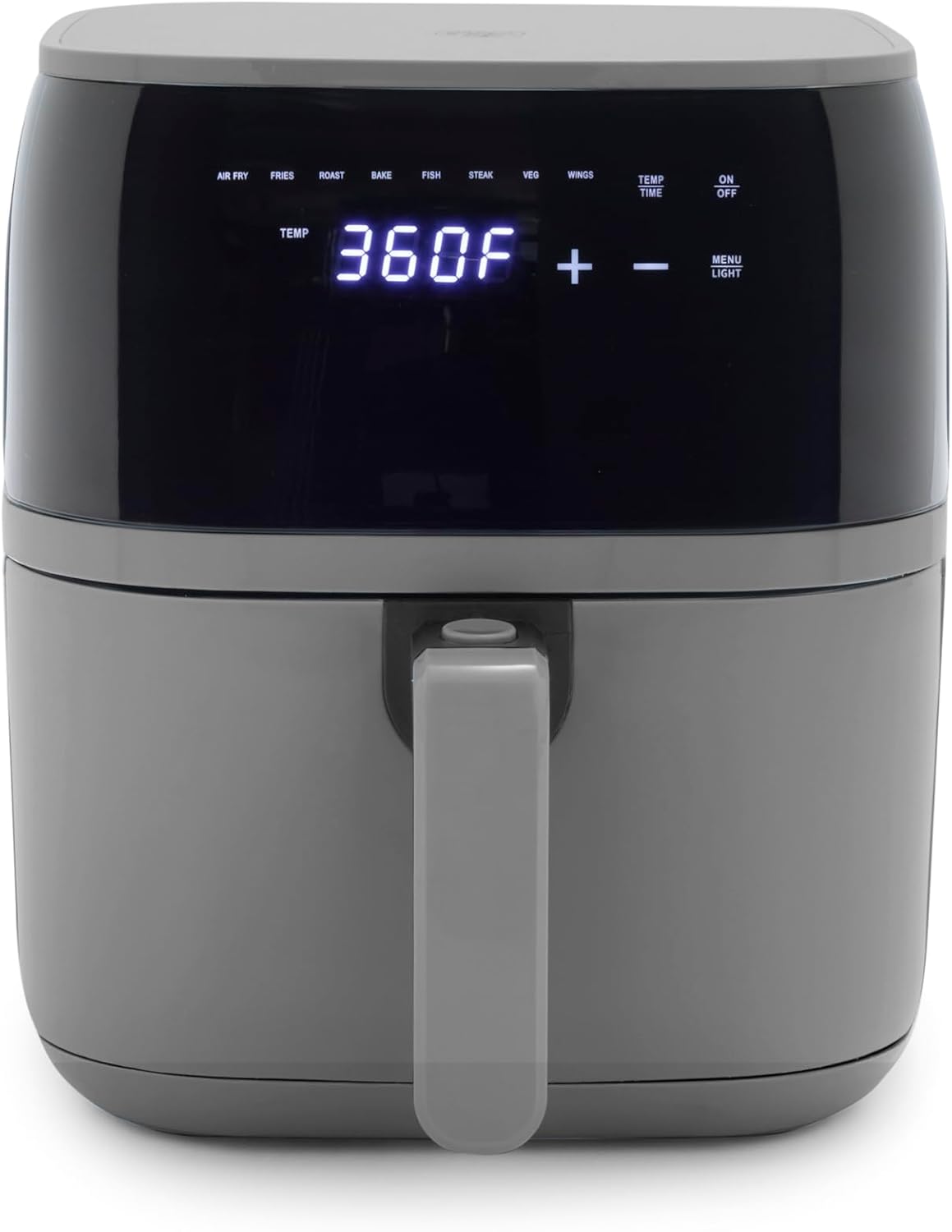
Price: ~$50-60 | Capacity: 5.3 QT | Rating: New release (limited reviews)
GreenLife has been making PFAS-free cookware for years, and their air fryer brings that same commitment to a much lower price point. The ceramic nonstick drawer is explicitly PFAS-free, PFOA-free, and free of lead and cadmium. If you want a non-toxic air fryer without spending $200, this is the one.
Why it’s safe: GreenLife’s Thermolon ceramic nonstick coating is one of the most well-known PFAS-free options in cookware. They’ve been doing this longer than most brands.
Key features:
- PFAS-free ceramic nonstick drawer
- 5.3QT capacity
- 8 one-touch cooking presets
- Easy-view window
- Dishwasher-safe parts
- Auto shut-off timer
Pros:
- Fraction of the price of glass or premium ceramic options
- GreenLife has a strong track record with PFAS-free coatings
- Good capacity for the price
- Dishwasher-safe basket
Cons:
- Ceramic coating will wear over time (1-2 years typical)
- Not as durable as glass or stainless steel options
- Fewer premium features
Ceramic stopgap, catalog look: Our Place Wonder Oven
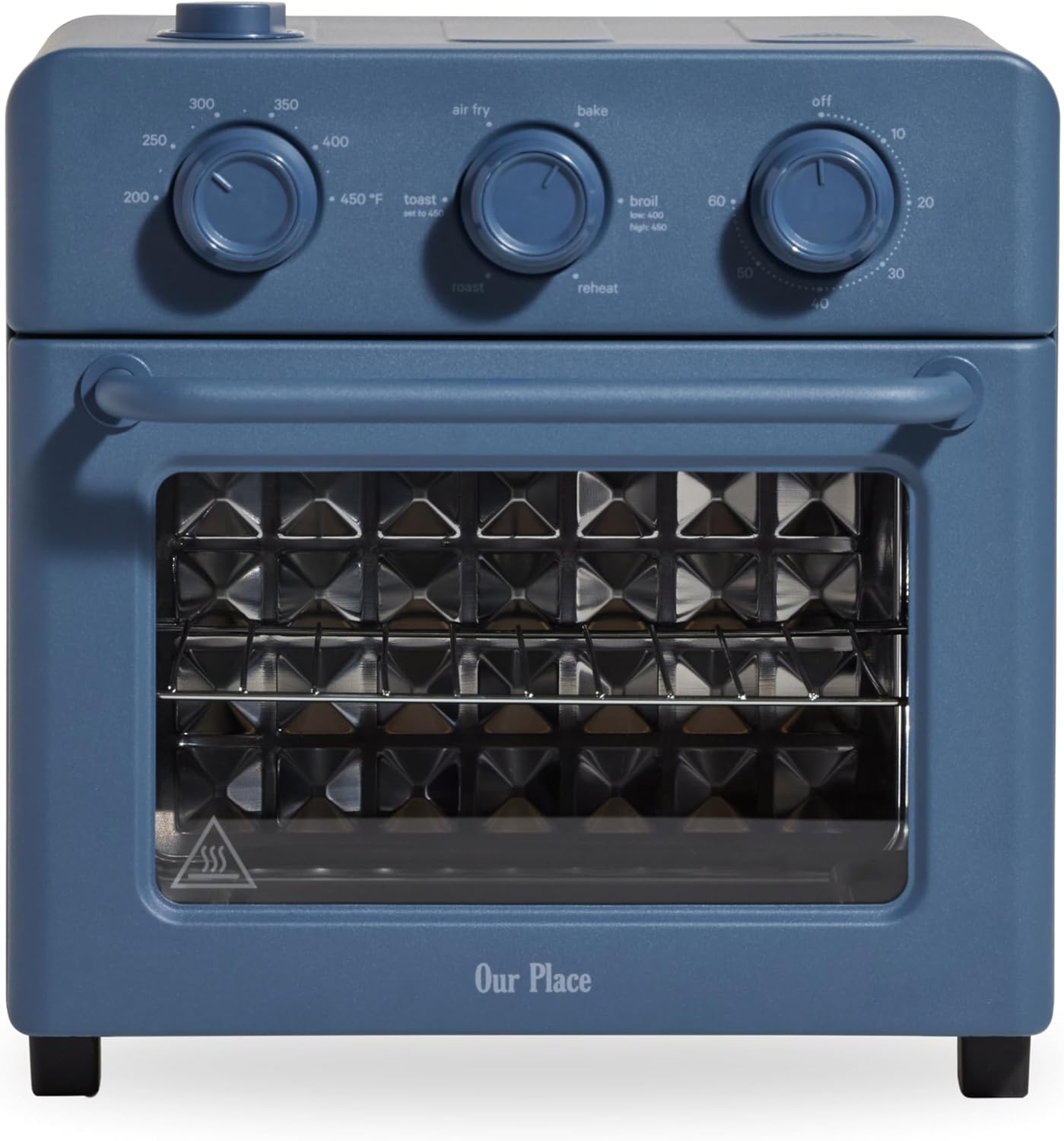
Price: ~$250 | Capacity: 13 QT | Rating: 4.3 stars
From the makers of the Always Pan – the cookware brand that made “non-toxic kitchen” mainstream – the Wonder Oven is a 6-in-1 air fryer toaster oven with steam infusion technology. It’s the best-looking air fryer on this list by a mile, and the PFAS-free commitment is baked into Our Place’s entire brand identity.
Why it’s safe: Our Place uses a non-toxic, PFAS-free ceramic coating across all their products. Their brand was literally built on the promise of safer cookware.
Key features:
- 6-in-1: air fry, toast, roast, bake, broil, and steam
- Steam infusion technology for juicier results
- 13QT capacity
- PFAS-free ceramic coating
- Stainless steel interior
- Comes with basket, rack, pan, and tray
Pros:
- Steam infusion is unique – makes roasted chicken and vegetables noticeably better
- Beautiful design that looks good on your counter
- Versatile enough to replace multiple appliances
- Strong brand reputation for non-toxic products
Cons:
- Premium price (~$250)
- Takes up more counter space than a basic air fryer
- Steam feature has a learning curve
Quick Comparison Table
| Air Fryer | Surface | Capacity | Price | Best For |
|---|---|---|---|---|
| Typhur Sync | PFAS-free ceramic | 8 QT | ~$200 | Ceramic stopgap |
| Fritaire Pro | Glass | 5 QT | $200 | Zero-coating purists |
| Ninja Crispi | Glass | 4 QT | ~$160 | Best overall (glass) |
| Nuwave Bravo XL Pro | Stainless steel | 30 QT | ~$300 | Families |
| GreenLife 5.3QT | PFAS-free ceramic | 5.3 QT | ~$50-60 | Budget |
| Our Place Wonder Oven | PFAS-free ceramic + SS | 13 QT | ~$250 | Premium/stylish |
Tips for Safe Air Frying
Even with a non-toxic air fryer, a few habits will keep things as safe as possible:
- Keep temperatures under 400°F when you can. Higher temps accelerate wear on any coating. Most foods air fry perfectly at 350-380°F.
- Don’t scratch ceramic coatings. Use silicone or wooden utensils. Metal tongs and spatulas will damage the surface and expose whatever’s underneath.
- Replace baskets when the coating chips. If you see the ceramic peeling, flaking, or wearing through to the metal underneath, it’s time for a new basket. Some brands sell replacement baskets separately.
- Use unbleached parchment paper. It creates a barrier between food and any surface, reduces sticking on stainless steel models, and makes cleanup easier. Just make sure it doesn’t block airflow.
- Skip the cooking sprays. Aerosol cooking sprays (like PAM) contain propellants that damage ceramic coatings. Use a light brush of avocado or olive oil instead.
Frequently Asked Questions
Is ceramic coating safe in air fryers?
Ceramic coating is safe if it’s genuinely PFAS-free. Not all ceramic coatings are created equal – some manufacturers use PFAS in the production process even if the final product tests low. Look for brands that explicitly state “PFAS-free” (not just “PFOA-free,” since PFOA is only one of thousands of PFAS chemicals). The brands on this list – Typhur, GreenLife, and Our Place – all make explicit PFAS-free claims.
Are glass air fryers better than ceramic?
Yes. Glass is inert. Ceramic coatings are a wear item. Use glass (Ninja Crispi) or stainless (Nuwave) if you can. Use PFAS-free ceramic only if that is what gets the Teflon basket out this month.
Do air fryers release microplastics?
Traditional nonstick (PTFE/Teflon) coatings can release micro and nanoplastic particles, especially as they degrade. A 2022 study found that a single surface crack on a Teflon-coated pan could release thousands of microplastic particles. Air fryers with the same coatings have the same risk – and the high-heat, high-airflow environment may make it worse. Glass and stainless steel air fryers don’t have this problem at all. If you’re concerned about microplastics in other areas of your life, check out our guide on microplastics in laundry.
Can I just use a stainless steel basket in my existing air fryer?
Sometimes, yes. Aftermarket stainless steel baskets exist for some popular air fryer models. Just make sure the basket fits properly and doesn’t block airflow. It’s a cheaper option than buying a whole new appliance, but sizing can be tricky.
How long do PFAS-free ceramic coatings last?
Typically 1-3 years with regular use. Ceramic coatings are less durable than PTFE, which is actually a good thing from a health perspective – it means the coating breaks down into relatively harmless ceramic particles rather than forever chemicals. When the nonstick performance drops, it’s time to replace the basket or the unit.
The Bottom Line
Buy the Ninja Crispi so food sits in glass. Fritaire is the glass-bowl alternative if you accept the QC lottery. Nuwave Bravo is the stainless family oven. Typhur, GreenLife, and Our Place are PFAS-free ceramic stopgaps. They are not best. Teflon is the thing we are leaving.
Whatever you choose, switching to a Teflon-free air fryer is one of the easiest upgrades you can make for a healthier kitchen. And if you’re on a roll replacing toxic cookware, check out our full guide to the best non-toxic cookware for the rest of your kitchen.
This article contains affiliate links. If you buy through them, we may earn a commission at no extra cost to you. I only link products I would actually recommend on the materials.